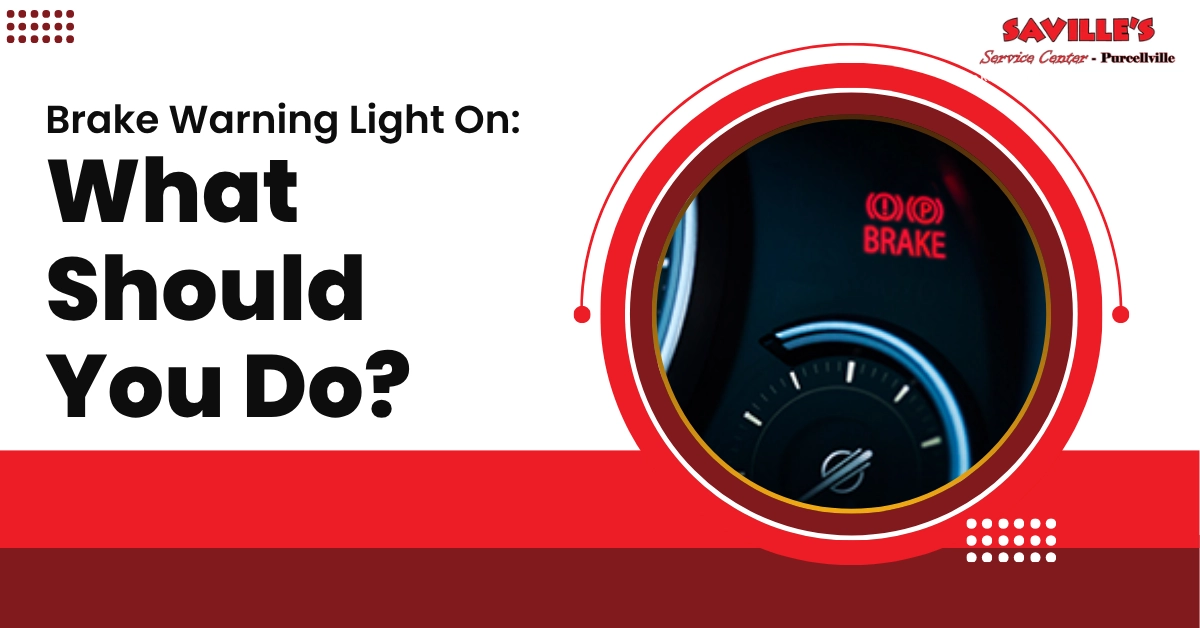
If your brake warning light comes on while driving, your braking system needs attention right away. Slow down, avoid sudden stops, and pull over somewhere safe. Ensure the parking brake is fully released, then pay attention to changes in pedal feel, braking response, or any visible brake fluid leaks. If the pedal feels soft, sinks to the floor, or the warning light stays on, schedule brake repair in Purcellville, VA, before driving any farther.
Key Takeaways
A brake warning light may indicate a low brake fluid level, worn brake components, a hydraulic problem, or an electrical fault. Stop driving when braking performance changes, the pedal feels soft, or the warning light appears with other brake-related alerts. Checking the parking brake and brake fluid level can provide useful information, but these steps do not replace a professional inspection. A brake inspection can identify leaks, worn parts, sensor faults, and hydraulic problems before they affect stopping ability. Saville’s Service Center provides brake inspection and brake repair in Purcellville, VA.
What Does the Brake Warning Light Indicate?
The brake warning light usually indicates a problem with the parking brake, brake fluid level, hydraulic system, or another part of the braking system. Some vehicles use one red brake light for several conditions, while others display separate brake and ABS warnings.
Common Causes of a Brake Warning Light
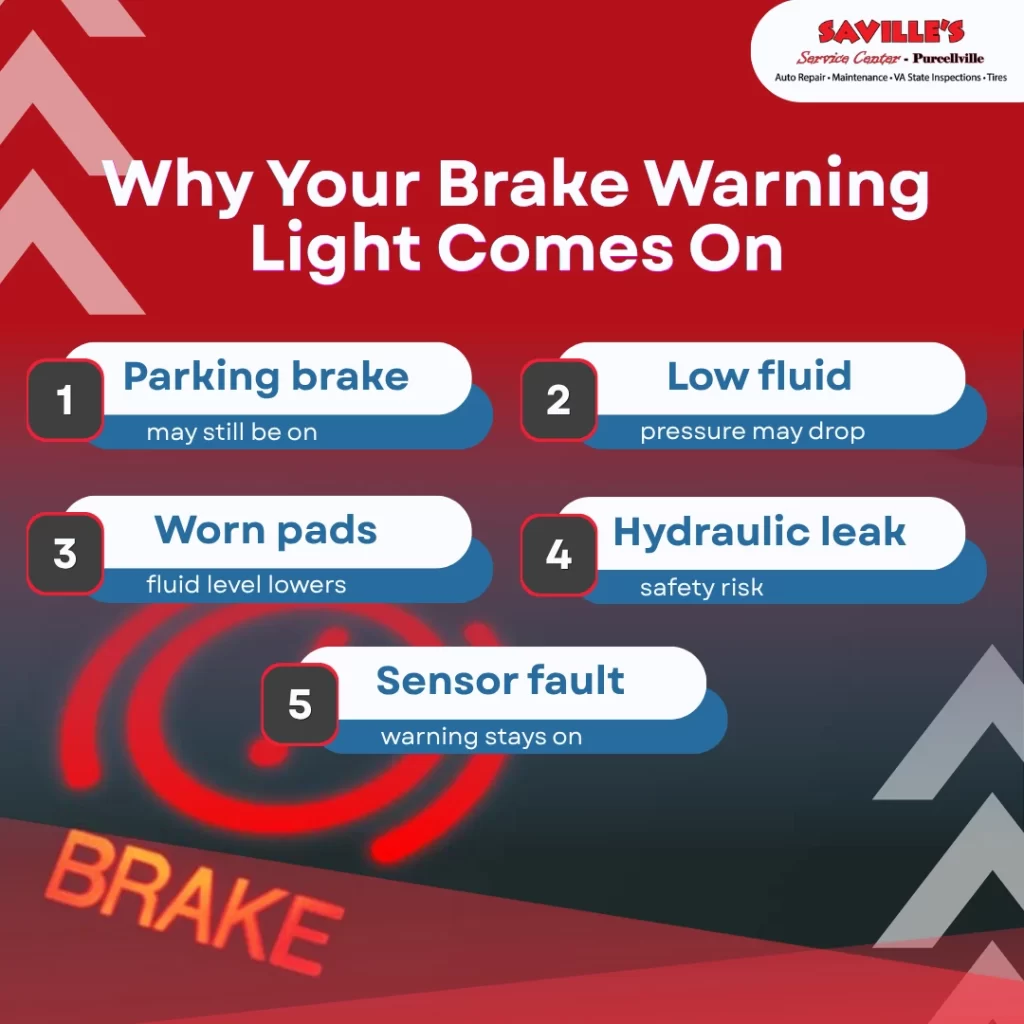
A brake warning light can come on for a simple reason, such as an engaged parking brake. It can also indicate a problem that needs prompt inspection. The parking brake is still engaged or the switch is stuck The brake fluid level is below the recommended range Worn brake pads have caused the fluid level to drop A hydraulic leak is reducing brake fluid pressure The master cylinder or another hydraulic component is failing A sensor, wiring connection, or control module has developed a fault
What a Low Brake Fluid Warning May Signal
A low brake fluid warning may indicate worn brake pads, a leak, or another hydraulic problem. Brake fluid does not normally disappear without a reason, so simply adding fluid may not fix the cause. A technician should inspect the system for leaks, pad wear, and pressure problems.
Is It Safe to Keep Driving?
It may not be safe to keep driving with a brake warning light on. The right response depends on how the vehicle feels and which warning lights are present.
When to Stop as Soon as Possible
Pull over in a safe location when the brake light comes on while driving and you notice reduced braking performance. Use gradual pressure on the brake pedal, turn on the hazard lights, and avoid sudden maneuvers. The brake pedal feels soft, spongy, or unusually hard The pedal sinks toward the floor The vehicle takes longer than normal to stop The vehicle pulls to one side while braking You hear grinding or other severe brake noise The brake warning light appears with the ABS light or another urgent warning If the brakes do not normally respond, arrange for towing instead of driving the vehicle to a repair shop
Why Reduced Braking Performance Needs Immediate Attention
Reduced braking performance can increase stopping distance and make the vehicle difficult to control. A small hydraulic leak or worn component can become a larger safety problem if the vehicle continues to be driven. Prompt inspection helps protect the driver, passengers, and other road users.
Common Problems Behind a Brake Warning Light
The warning light may be connected to fluid loss, worn components, hydraulic pressure problems, or an electrical fault. A complete inspection is often needed because several brake problems can produce similar symptoms.
Low Brake Fluid, Worn Brake Pads, and Hydraulic Leaks
Low brake fluid is one of the most common reasons for a red brake warning light. The level may drop as brake pads wear, but a leak can also lower the fluid level. Leaks may develop in brake lines, hoses, calipers, wheel cylinders, or the master cylinder. Worn brake pads can also reduce braking performance and damage the rotors if they are not replaced. Air or contamination in the hydraulic system may cause a soft pedal and inconsistent braking response.
Parking Brake, ABS, and Master Cylinder Problems
A parking brake switch can keep the warning light on even after the brake is released. An ABS fault may trigger a separate ABS light, and some vehicles may display both lights simultaneously. A failing master cylinder can reduce hydraulic pressure and may cause the pedal to sink or feel inconsistent.
What to Do Next
Start with a few safe checks, then schedule an inspection when the light stays on or braking performance changes. Do not rely on a dashboard reset to solve a brake-system problem.
Check the Parking Brake and Brake Fluid Level
Confirm that the parking brake is fully released. If the light remains on, check the brake fluid reservoir while the vehicle is parked on level ground and the engine is cool. The fluid should be between the minimum and maximum marks. Do not open the brake fluid reservoir unless necessary because moisture and dirt can contaminate the fluid. Do not add fluid to hide a leak or other unresolved problem. If the level is low, schedule a brake inspection.
Watch for Additional Warning Signs
Pay attention to changes in pedal feel, stopping distance, noise, vibration, and vehicle direction while braking. Visible fluid near a wheel or under the vehicle may indicate a leak. These signs call for immediate professional evaluation.
When to Schedule a Brake Inspection in Purcellville, VA
Schedule a brake inspection in Purcellville, VA, when the light stays on after the parking brake is released, the fluid level is low, or braking feels different. A technician can inspect the pads, rotors, hydraulic system, sensors, wiring, and related components to find the cause.
Schedule Brake Repair at Saville’s Service Center in Purcellville, VA
Saville’s Service Center provides brake inspection and brake repair in Purcellville, VA. The team can check the warning light, inspect the braking system, explain the findings, and recommend the repairs needed to restore safe operation. Contact Saville’s Service Center to schedule an appointment when your brake warning light stays on or your vehicle shows signs of reduced braking performance.
Frequently Asked Questions
What Other Dashboard Lights May Appear With the Brake Warning Light?
The ABS light, traction control light, or stability control light may appear with the brake warning light. Multiple lights can indicate a shared electrical, hydraulic, or wheel-speed sensor problem. A diagnostic inspection can determine whether the systems are connected.
How can I check the brake fluid level?
To check the brake fluid level, park on level ground, turn off the engine, and locate the brake fluid reservoir under the hood. Check whether the fluid sits between the minimum and maximum marks. If the level is low, arrange an inspection rather than repeatedly adding fluid.
What are the signs of worn brake pads?
Common signs of worn brake pads include squealing, grinding, reduced braking response, and vibration during braking. Some vehicles also have an electronic brake-pad warning. A brake inspection can confirm pad and rotor condition.
Can weather affect the brake warning light?
Cold temperatures, moisture, and corrosion can affect sensors or electrical connections, but weather should not be assumed to be the only cause. A warning light that stays on or returns needs diagnosis, especially when braking performance changes.
How often should brakes be inspected?
Brakes should be inspected according to the vehicle manufacturer’s maintenance schedule and whenever symptoms appear. Many drivers also have the brakes checked during routine service or tire rotations. Driving conditions, mileage, and brake wear can change how often an inspection is needed.
Conclusion
A brake warning light should be treated as a safety alert. Pull over when braking feels different, check the parking brake and fluid level, and arrange an inspection when the light stays on. Saville’s Service Center can diagnose the cause and provide brake repair in Purcellville, VA.