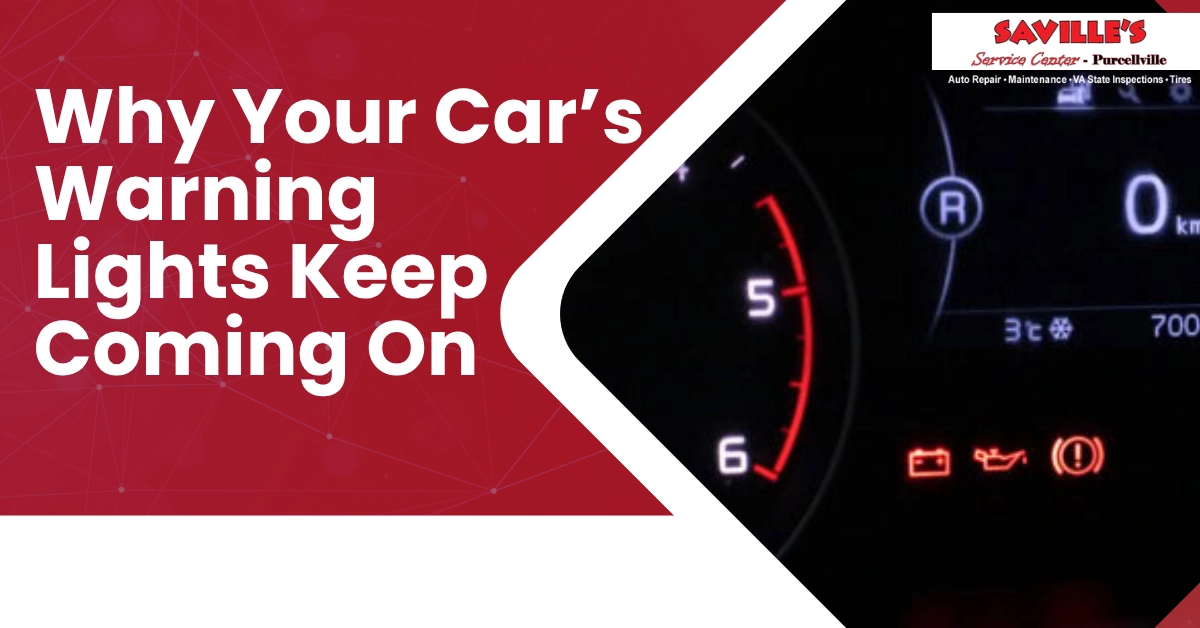
If your car’s warning lights keep coming on, it is usually a sign that something still needs attention. Faulty sensors, weak batteries, failing alternators, frayed wiring, or other electrical problems can keep triggering alerts even after the light turns off for a while. Ignoring these warnings can lead to bigger repairs and affect how your vehicle performs. Scheduling Expert Auto Electrical Repair in Purcellville, VA can help pinpoint the issue and get your car back to running reliably.
Key Takeaways
Recurring warning lights usually indicate that the original problem has not been repaired. Sensor faults, weak batteries, failing alternators, damaged wiring, and loose connections can trigger repeated alerts. A flashing warning light may indicate a more urgent problem than a steady light. Clearing a code does not repair the condition that caused it. Professional testing can narrow down the fault before parts are replaced.
What Repeated Warning Lights Usually Denote
A warning light that returns means the vehicle’s computer has detected the same fault again or found a related problem. The alert may involve the engine, charging system, brakes, tire pressure, airbags, or another monitored system.
Why Dashboard Warning Lights Return
Modern vehicles monitor many systems through sensors and control modules. When a reading falls outside the expected range, the computer stores a diagnostic trouble code and turns on the related light. The light may disappear when the reading returns to normal. It can come back when the same driving condition, temperature, vibration, or electrical load causes the fault again.
Why Clearing a Light Does Not Fix the Problem
Clearing a warning light only removes the stored code and turns off the indicator for the moment. It does not repair a failing component, damaged circuit, leak, or mechanical problem. The vehicle runs its system checks again after the code is erased. If the fault remains, the warning light usually returns. Clearing codes repeatedly can also remove useful information that a technician needs during diagnosis.
Common Causes Behind Warning Lights That Keep Coming Back
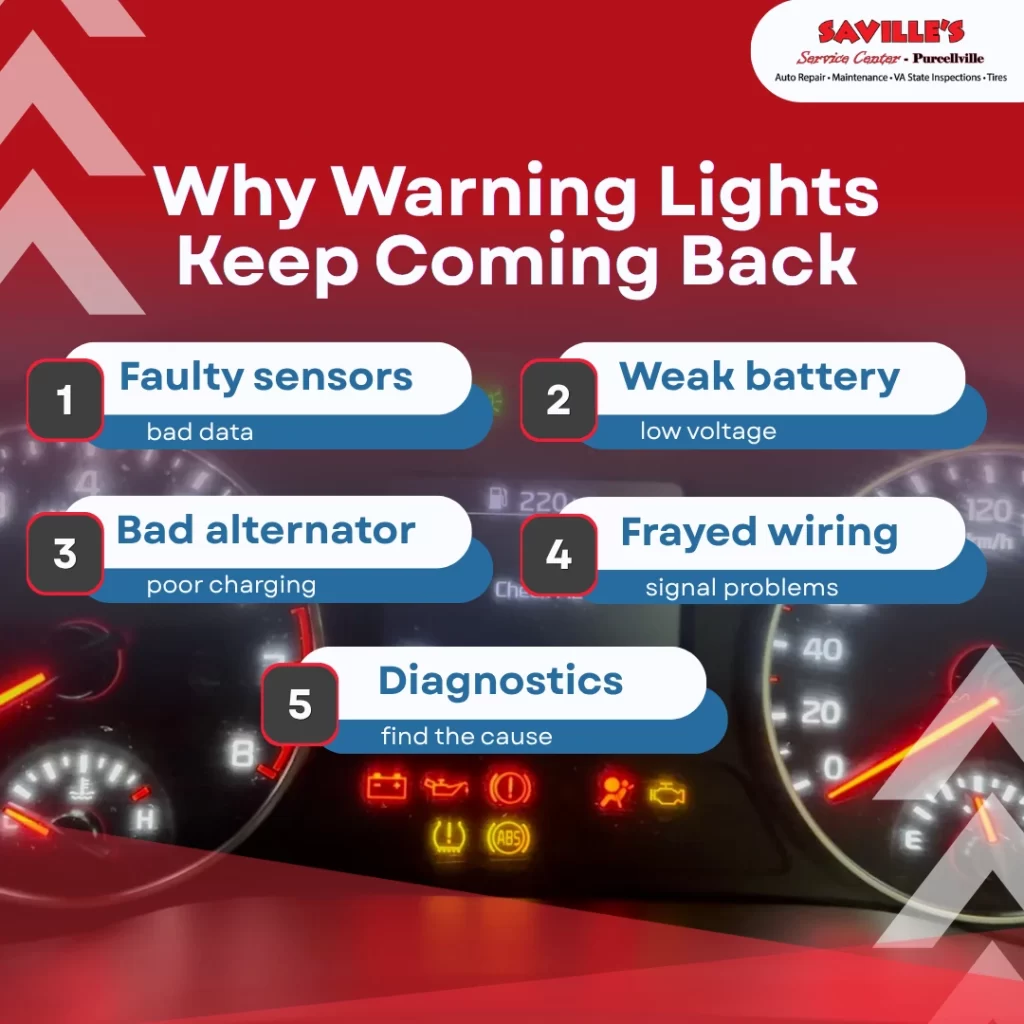
Repeated warning lights often come from sensor faults, charging problems, electrical damage, or intermittent connections. The exact cause depends on which light appears and when it turns on.
Sensor Faults
A dirty, damaged, or failing sensor may send inaccurate information to the vehicle’s computer. Oxygen sensors, wheel-speed sensors, mass airflow sensors, and tire-pressure sensors are common examples. A sensor code does not always denote that the sensor itself needs replacement. Wiring damage, contamination, vacuum leaks, and other problems can create readings that look like sensor failure.
Battery and Alternator Problems
Low voltage can affect several vehicle systems at once. A weak battery, loose terminal, failing alternator, or damaged charging cable may cause multiple warning lights, slow starting, dim lights, or electronic malfunctions. Voltage testing helps determine whether the battery can hold a charge and whether the alternator is supplying sufficient power while the engine runs.
Damaged Wiring and Loose Connections
Frayed wires, corrosion, loose grounds, and poorly seated connectors can interrupt communication between sensors and control modules. These faults may appear only when the vehicle vibrates, warms up, gets wet, or travels over rough roads. Because intermittent electrical faults may not be active during every test, technicians often inspect connectors, review live data, and test circuits under different operating conditions.
Software and Control Module Issues
Some warning lights involve software calibration or communication problems between vehicle modules. A technician may need to check manufacturer service information, module communication, and available software updates. Control modules should not be replaced based on a warning light alone. Power, ground, wiring, and network communication should be tested first.
Check Engine Lights Need Proper Diagnosis
A check engine light can represent anything from a loose fuel cap to an engine misfire. Reading the stored code is an important first step, but the code identifies the affected system rather than always naming the failed part.
Why Check Engine Light Diagnosis in Purcellville, VA, Matters
Timely check engine light diagnosis in Purcellville, VA, can help prevent a minor fault from becoming a larger repair. It can also help restore fuel economy, emissions performance, and dependable operation. A steady light usually allows time to schedule an inspection, but the vehicle should still be checked. A flashing check engine light may indicate an active misfire that can damage the catalytic converter. Reduce speed, avoid heavy acceleration, and arrange professional help as soon as it is safe.
How Professional Testing Finds the Cause
Professional diagnosis combines scan-tool data with physical testing. A technician may read trouble codes, review freeze-frame information, inspect related components, test circuits, and compare live sensor readings with expected values. This process helps separate the root cause from a secondary symptom. It can reduce unnecessary parts replacement and provide a clearer repair recommendation.
When Warning Lights Point to an Electrical Problem
Several warning lights appearing at once can indicate unstable system voltage or a communication fault. Electrical problems may affect the battery, alternator, wiring, grounds, fuses, connectors, or control modules.
Signs of a Possible Electrical Fault
Multiple warning lights turn on simultaneously The lights flicker or change with engine speed The vehicle starts slowly or needs a jump-start Headlights or interior lights dim unexpectedly Power windows, locks, gauges, or infotainment features work intermittently The battery light stays on while the engine is running
Why Auto Electrical Repair in Purcellville, VA, May Be Needed
Recurring electrical faults need circuit testing rather than guesswork. A technician can check battery condition, charging output, voltage drop, wiring continuity, ground connections, and module communication. For local road and community information, visit the Town of Purcellville website. For vehicle testing and repair, use a qualified automotive service provider.
What to Do When a Warning Light Comes On
Your next step depends on the symbol, color, and vehicle behavior. Check the owner’s manual because warning symbols and recommended actions vary by make and model. Check the light and vehicle behavior: Note whether the light is steady or flashing and whether the vehicle is overheating, losing power, making unusual sounds, or driving differently. Move to a safe location when needed: Stop driving if you see an oil-pressure or overheating warning, smell fuel, notice smoke, or feel a serious braking or steering problem. Check simple items safely: A loose fuel cap or visibly low tire may explain some alerts. Do not open a hot cooling system or attempt repairs near moving engine parts. Avoid repeatedly clearing the code: Stored data can help a technician reproduce the fault and identify the cause. Schedule a diagnostic inspection: Have recurring, flashing, or unexplained warning lights tested before the problem becomes more severe.
Schedule Car Diagnostic Service at Saville’s Service Center
Recurring warning lights deserve more than a quick reset. Saville’s Service Center can inspect the affected system, explain the test results, and recommend repairs based on the findings. The shop’s ASE-certified technicians use diagnostic equipment and hands-on testing to evaluate engine, charging, and electrical concerns. Customers also receive clear communication about the problem and the recommended next steps. Visit Saville’s Service Center to schedule car diagnostic service in Purcellville, VA. Addressing the warning now can help protect vehicle reliability and reduce the chance of an unexpected breakdown.
Frequently Asked Questions
Can warning lights indicate a serious safety issue?
Yes, warning lights for brakes, oil pressure, engine temperature, steering, airbags, and charging problems can indicate serious concerns. Stop in a safe place and check the owner’s manual when the vehicle behaves abnormally or a red warning light appears.
How can I reset my car’s warning lights?
Reset procedures vary by vehicle and warning system. Some maintenance reminders can be reset through the dashboard menu, but diagnostic warning lights should not be cleared until the cause has been identified. Follow the owner’s manual or ask a technician for the correct procedure.
Are warning lights consistent across all vehicle makes?
No, warning lights are not consistent across all vehicle makes. Many symbols are similar, but their color, wording, and meaning can vary by manufacturer and model. The owner’s manual provides the most accurate explanation for your vehicle.
What should I do if a warning light flashes?
Treat a flashing warning light as urgent. Reduce speed, avoid hard acceleration, and pull over safely if the vehicle loses power, overheats, shakes, or develops another serious symptom. Contact a repair professional or roadside assistance for guidance.
Will my car pass inspection with warning lights on?
It depends on the warning light and the inspection requirements that apply to the vehicle. An illuminated check engine light can affect emissions inspection results in areas that require emissions testing. Have the fault diagnosed before the inspection and confirm current Virginia requirements.
Get a Clear Answer for Recurring Warning Lights
A warning light that keeps returning is evidence that the vehicle still detects a fault. Proper testing can identify whether the cause is a sensor, charging-system problem, damaged circuit, or another mechanical or electrical issue. Schedule a diagnostic visit with Saville’s Service Center in Purcellville, VA, to find the cause and review the repair options. A clear diagnosis is the safest way to stop recurring alerts and keep the vehicle dependable.