If your steering wheel shakes when braking, the vibration often begins at the front brakes. Changes in rotor thickness, uneven pad deposits, or a sticking caliper can make braking force rise and fall as the wheels turn. A proper brake service in Purcellville, VA, can identify the source before parts are replaced.
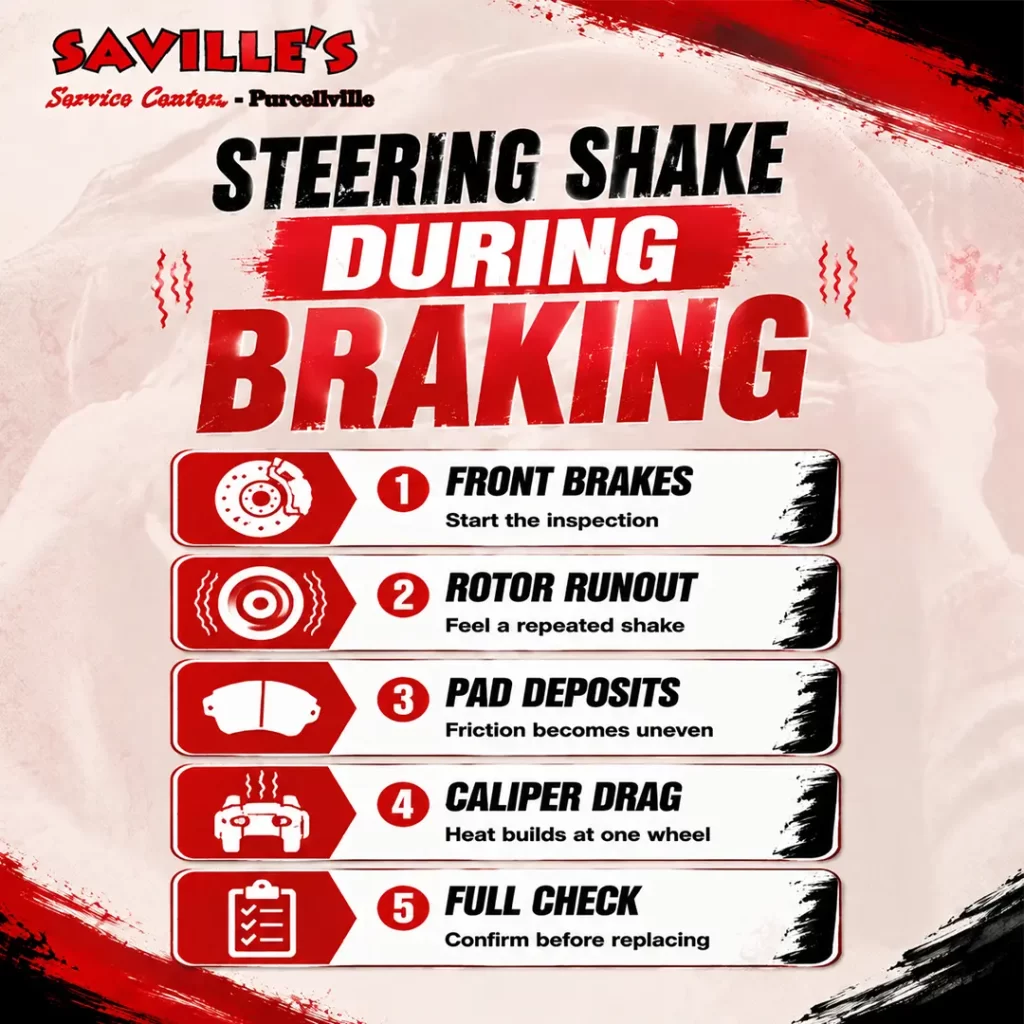
Steering Wheel Shakes When Braking: Common Causes
A brake-only shake usually means a rotating brake part is not applying force evenly. The symptom may be most noticeable while slowing from Route 7 speeds or descending the hills around Western Loudoun County.
Brake Rotor Thickness Variation or Runout
Small differences in rotor thickness can push the brake pads in and out during each wheel rotation. Drivers often call these parts warped brake rotors, although thickness variation or side-to-side runout may describe the condition more accurately.
Heat can contribute to this problem, especially after repeated hard stops or when a caliper does not release fully. Rust or debris between the rotor and wheel hub can also keep the rotor from sitting squarely.
Uneven Pad Material on the Rotor
Brake pads leave a thin transfer layer on the rotor during normal use. If that layer becomes uneven, friction can change around the rotor surface and cause brake vibration when stopping.
This can happen after the brakes get very hot and the driver holds firm pedal pressure while stopped. The symptom may resemble a damaged rotor, so measurements and a surface inspection matter.
A Sticking Caliper or Hardware Problem
A caliper that sticks can keep one pad in contact with the rotor. The extra heat may create uneven wear, pad deposits, discoloration, or a pull to one side.
Dry or seized slide pins can cause similar trouble. Saville’s Service Center can inspect the calipers, pads, rotors, and mounting hardware as one system instead of assuming the rotor is the only cause.
What the Location and Timing of the Vibration Can Tell You
Where you feel the vibration can help narrow the inspection. It does not confirm the failed part, but it gives a technician useful information before measurements begin.
Steering Wheel Shake Often Points to the Front Brakes
The front brakes usually handle more of the stopping load. A changing braking force at a front wheel can travel through the steering linkage and make the wheel move in your hands.
The shake may become stronger when braking from higher speeds when driving toward Purcellville or Leesburg. If the car remains smooth while cruising and vibrates only with the brake pedal applied, brake components deserve close attention.
Pedal Pulsation or Seat Vibration May Point Elsewhere
A pulsing pedal often accompanies rotor thickness variation, but the pedal alone does not identify which axle is involved. A vibration felt more through the seat or floor can point toward the rear brakes.
Tell the technician whether the steering wheel, pedal, seat, or entire vehicle shakes. Also note the speed, brake pressure, noise, smell, and any pull to one side.
Could the Problem Be Something Other Than the Rotors?
Brake vibration can involve the hub, wheel installation, caliper, steering, or suspension. Replacing rotors without checking these areas can allow the symptom to return.
Hub and Wheel Installation Problems
Rust or debris on the hub face can prevent a rotor from sitting flat. Uneven lug-nut torque may also affect how the rotor and wheel are clamped to the hub.
A technician can clean the mounting surfaces, check hub and rotor runout, and tighten wheel fasteners to the correct specification. If measurements show the rotors cannot be reused, brake rotor replacement may be part of the repair.
Worn Steering or Suspension Parts
Loose tie-rod ends, ball joints, control-arm bushings, or wheel bearings may amplify a braking shake. These parts may also cause clunks, looseness, uneven tire wear, or wandering outside of braking.
A vibration that also appears at cruising speed may involve tire balance, wheel damage, or another rotating part. The Saville’s Service Center team can separate a brake-related symptom from a tire or front-end problem.
What to Do When Brake Vibration Starts
Schedule an inspection when the vibration repeats, grows stronger, or appears with noise or pulling. Avoid repeated hard stops when possible and leave extra space while you arrange service.
Stop driving and arrange assistance if braking power drops, the pedal sinks, fluid is leaking, or the car pulls sharply. A red brake warning light also deserves prompt attention. Our recent guide explains what a brake warning light may mean.
Virginia’s annual safety inspection includes checks of brake pads, rotors, linings, fluid level, leaks, and related parts. The Virginia State Police vehicle safety inspection overview explains the official inspection sequence. An annual inspection is useful, but a new vibration should be checked when it appears.
Takeaways
A steering wheel shake that appears only during braking often points toward uneven braking force at the front wheels. Rotor thickness variation, uneven pad deposits, a sticking caliper, or a mounting problem may be responsible.
The symptom alone cannot confirm which part needs repair. A measured inspection can find the cause, check related steering and suspension parts, and determine whether resurfacing, cleaning, hardware service, or replacement is appropriate.
Frequently Asked Questions
Is it safe to drive if my steering wheel shakes when braking?
It may not be safe if the shake is strong or braking performance has changed. Stop driving if the pedal sinks, stopping distance increases, fluid leaks, or the vehicle pulls sharply.
Do warped brake rotors always cause steering wheel shake?
No, a steering wheel shake can also result from uneven pad deposits, rotor runout, a sticking caliper, or loose front-end parts. Measurements are needed to identify the actual cause.
Why does the vibration feel worse at higher speeds?
More wheel rotations occur each second at higher speeds, and the brakes must remove more energy while slowing. Any variation in braking force may therefore feel stronger through the steering wheel.
Can new brake pads fix a shaking steering wheel?
New pads alone may not fix the shake if the rotor surface, hub, caliper, or suspension has a problem. The full brake assembly should be inspected before parts are selected.
Will a wheel alignment stop brake vibration?
A wheel alignment usually will not correct vibration caused by brake rotors or calipers. Alignment may be needed for pulling or uneven tire wear, but the brake-only shake still needs diagnosis.
Schedule a Brake Inspection at Saville’s Service Center
Saville’s Service Center provides brake inspections and repairs for drivers in Purcellville, Round Hill, Hamilton, and nearby Western Loudoun communities. If your steering wheel shakes when braking, the team can inspect the front and rear brakes, measure the rotors, and explain the findings.
Contact Saville’s Service Center to schedule an inspection, or call (540) 338-5749. The shop is located at 37251 E Richardson Ln, Unit B, Purcellville, VA 20132.