


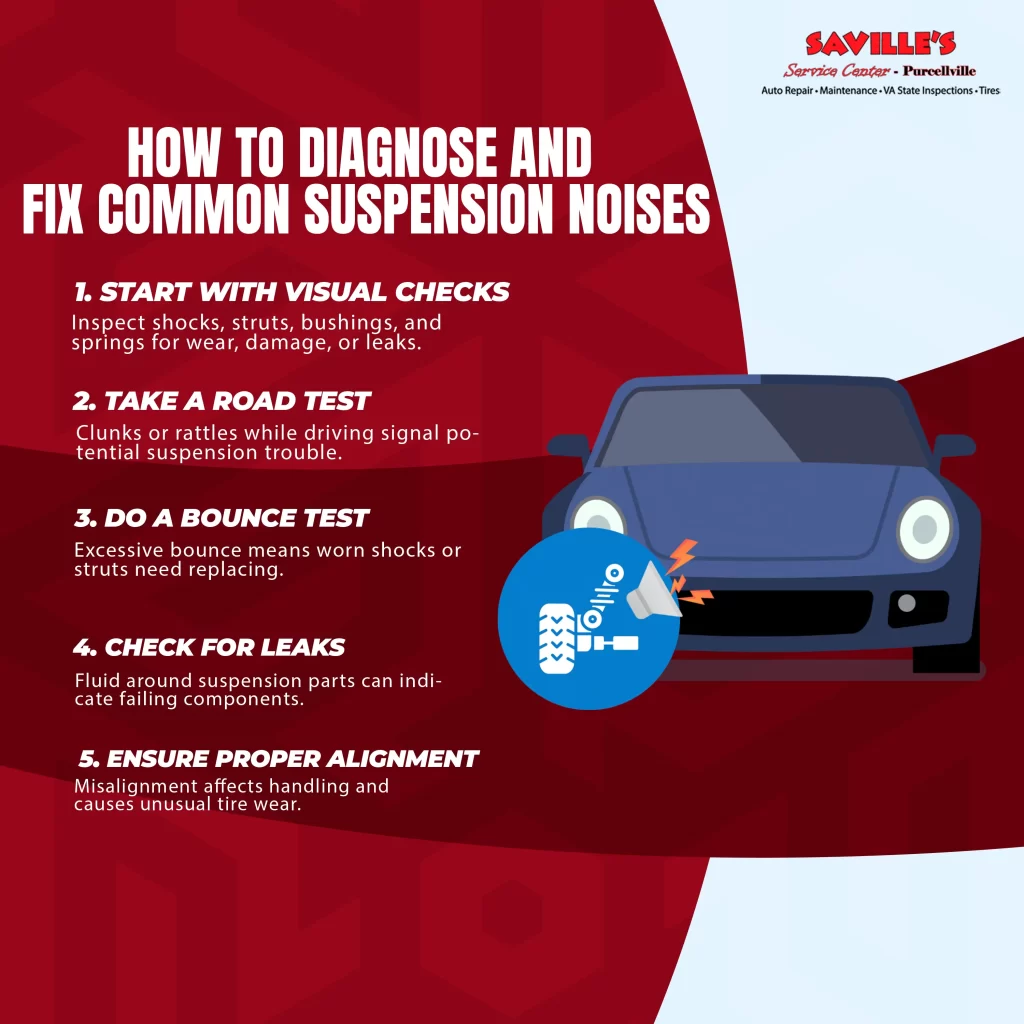
To detect and fix suspension noises, start with a visual inspection of shocks, struts, and bushings for wear or leaks. Then, take your vehicle for a road test and listen for clunks or rattles. Perform a bounce test to see how your vehicle responds. Also, check wheel alignment and look for fluid leaks under the vehicle. Discovering these problems early can save you money, so stick around to learn how to fix them effectively!
Key Takeaways
- Conduct a visual inspection for damage, wear, and leaks on shocks, struts, and control arms to identify potential issues.
- Perform a road test to listen for clunks, rattles, or squeaks when navigating uneven surfaces or making sharp turns.
- Execute a bounce test by pushing down on the vehicle; continuous bouncing indicates worn shocks or struts needing replacement.
- Check for fluid leaks under the vehicle or on suspension components, as these can signal failing shocks or struts.
- Ensure proper wheel alignment to prevent uneven tire wear and handling issues that can contribute to suspension noise.
Diagnosing Suspension Issues
When you notice unusual sounds from your suspension, it’s essential to start with a thorough diagnosis. Begin with a visual inspection to check for any obvious signs of wear or damage, then take your vehicle for a road test. Following that, you can perform a bounce test and check for leaks, making sure everything’s aligned properly for safe driving.
Visual Inspection
A thorough visual inspection is essential for diagnosing suspension issues in your vehicle. Start by checking for any visible damage to components like shocks, struts, and control arms. Look for signs of wear, such as cracks or leaks in the rubber bushings. Don’t forget to inspect the springs for sagging or breakage; these can be key indicators of trouble. While you’re at it, examine the mounting points for rust or corrosion, which can affect stability. Also, look for uneven tire wear, as this can signify alignment issues linked to suspension problems. By knowing how to diagnose suspension noise through visual cues, you’ll be better prepared to address any issues before they escalate.
Road Test
After completing your visual inspection, the next step in diagnosing suspension issues is to take your vehicle for a road test. This will help you pinpoint any suspension noise diagnosis more effectively. As you drive, pay attention to how the vehicle feels and sounds over various road conditions. Listen for clunks, rattles, or squeaks, especially when turning or hitting bumps. These sounds can indicate where to find suspension noises. Try to replicate the noises by maneuvering your vehicle in different ways—sharp turns, sudden stops, and uneven surfaces can reveal hidden issues. Remember to take notes on the conditions that produce the noises, as this information will be invaluable when discussing repairs with your mechanic.
Bounce Test
To diagnose suspension issues effectively, performing a bounce test is essential. Start by pushing down on the front or rear of your vehicle with enough force to compress the suspension. Release it suddenly and observe how the vehicle responds. If it bounces back up and settles quickly, your suspension’s likely fine. However, if it keeps rebounding or feels excessively soft, you may be dealing with worn-out shock absorbers or struts, which can be a contributing factor to suspension noise diagnosis. To specifically focus on how to diagnose front suspension noise, pay attention to any unusual sounds during the test. If you hear clunks or rattles, it’s time to investigate further and consider getting professional help.
Wheel Alignment Check
Checking your wheel alignment is an essential step in diagnosing suspension issues. Misalignment can lead to uneven tire wear and affect your vehicle’s handling. If you notice your car pulling to one side or hear strange noises while driving, it could indicate a bad suspension. You might wonder how much it costs to fix suspension problems; alignment services typically range from $75 to $100, but this can vary based on your vehicle and location. Keep an ear out for any clunking or rattling sounds, as these can signal underlying suspension issues. Regular alignment checks can prevent more costly repairs down the road, ensuring your ride remains smooth and safe.
Check For Leaks
One of the key signs of suspension trouble is the presence of leaks. If you notice fluid spots under your vehicle, it might indicate a problem with your shocks or struts. These components are critical for absorbing bumps and maintaining stability, and leaks can lead to increased suspension noises and poor handling. To check for leaks, inspect the shock absorbers and struts for any signs of wetness or fluid accumulation. If you find a leak, it’s important to address it quickly. Ignoring it could worsen the issue, leading to more costly repairs. Fixing the suspension on your car involves replacing the damaged parts to restore proper function and guarantee a smooth ride. Regular inspection can prevent leaks from becoming a bigger problem.
Fixing Suspension Issues
Suspension issues can lead to a bumpy ride and affect your vehicle’s handling, so addressing them promptly is crucial. If you’re wondering how to fix suspension noise, follow these steps:
- Inspect Components: Check for worn-out parts such as struts, shocks, and bushings. Replacing these can greatly reduce noise.
- Tighten Bolts: Loose bolts can contribute to rattling sounds. Verify all components are securely fastened.
- Seek Expert Assistance: If problems persist, it may be necessary to seek the advice of a skilled mechanic. You might wonder, is repairing the suspension system costly? The price can differ, but addressing issues promptly can help avoid more expensive problems in the future.
Taking action now can guarantee a smoother, safer ride for you and your passengers.
Frequently Asked Questions
What Are Common Signs of Suspension Problems?
Common signs of suspension problems include excessive bouncing, uneven tire wear, difficulty steering, and unusual noises while driving. If you notice any of these, it’s essential to have your vehicle inspected by a professional.
How Often Should I Inspect My Suspension System?
You should inspect your suspension system at least once a year or whenever you notice changes in ride quality. Regular checks help catch issues early, ensuring your vehicle remains safe and comfortable on the road.
Can Bad Suspension Affect Tire Wear?
Yes, bad suspension can definitely affect tire wear. If your suspension’s not functioning properly, it can lead to uneven tire contact with the road, causing premature wear. It’s essential to address suspension issues promptly.
Are Suspension Noises Always Serious?
Not all suspension noises are serious, but they shouldn’t be ignored. Some might indicate minor issues, while others could signal significant problems. It’s best to have a professional evaluate any unusual sounds you hear.
What Is the Cost of Suspension Repairs?
The cost of suspension repairs varies depending on the issue and your vehicle’s make and model. You’ll typically spend anywhere from $100 to over $1,500, so getting an estimate beforehand is a smart move.
Conclusion
In the world of your vehicle, suspension noises are like whispers of trouble, urging you to listen closely. By diagnosing and addressing these issues, you’re not just fixing a problem; you’re tuning the harmony of your ride. Just as a musician adjusts their instrument for the perfect melody, tending to your suspension guarantees a smooth journey through life’s twists and turns. So, embrace the sounds, act with purpose, and keep the rhythm of your travels steady and safe!