To detect and fix common engine problems, pay attention to unusual noises, dashboard warning lights, and changes in performance. If your engine’s idling is rough or you notice excessive vibrations, it might be time for a check-up. Regular maintenance, like oil changes and filter inspections, can keep minor issues from snowballing. And when in doubt, consulting a professional can save you hassle and money. Keep going to learn more about seeking help and how to address specific issues effectively.
Key Takeaways
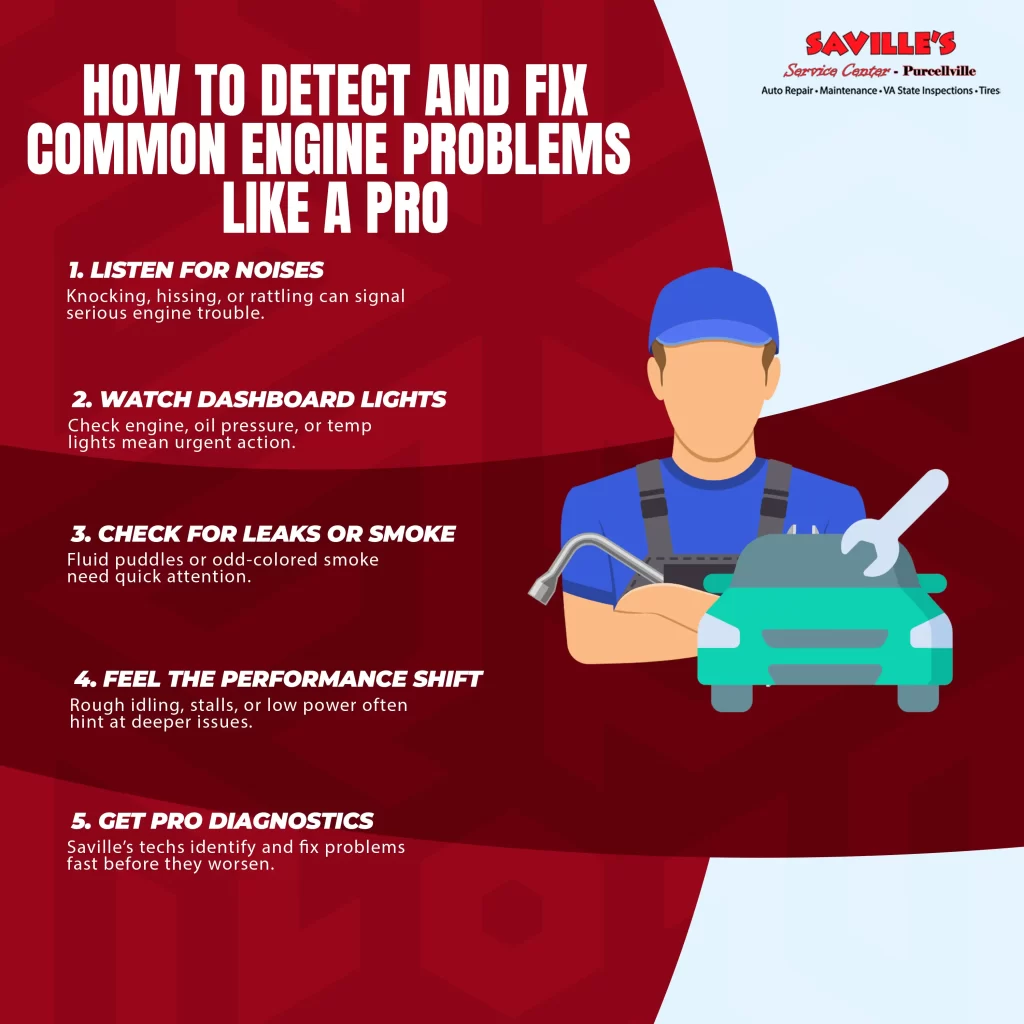
- Regularly listen for unusual noises and watch for dashboard warning lights to catch engine issues early.
- Check for smoke colors and fluid leaks to diagnose potential engine problems accurately.
- Maintain coolant levels and replace spark plugs to prevent minor issues from escalating.
- Schedule routine inspections and oil changes to enhance engine performance and longevity.
- Consult a professional mechanic for complex repairs and accurate diagnostics when needed.
Recognizing the Early Warning Signs of Engine Problems
When it comes to engine problems, spotting the early warning signs can save you time and money. You might notice unusual noises, warning lights on your dashboard, or changes in performance and fuel efficiency. Understanding these indicators can help you address issues before they escalate.
Unusual Noises and What They Indicate
Have you ever noticed a strange noise coming from your engine and wondered what it could mean? Unusual sounds can be early indicators of common engine problems. Here are some noises to pay attention to:
- Knocking: Often signals a problem with your engine’s bearings or oil levels.
- Hissing: Could indicate a coolant leak or a vacuum leak.
- Squealing: Typically points to worn-out belts or loose components.
- Rattling: Might suggest loose parts or a failing catalytic converter.
- Grinding: Often indicates serious issues with your engine or transmission.
Identifying these sounds early can save you time and money on repairs. If you hear any of these noises, it’s wise to have your vehicle checked out promptly.
Warning Lights on Your Dashboard and Their Meanings
Dashboard warning lights act as your vehicle’s first line of communication, alerting you to potential engine issues before they escalate. When your check engine light comes on, it can indicate various common check engine problems such as a loose gas cap, a faulty oxygen sensor, or even a failing catalytic converter. Ignoring these lights can lead to more severe issues and costly repairs. Additionally, pay attention to other lights like the oil pressure warning, which signals low oil levels, or the temperature warning, indicating overheating. Regularly checking your dashboard lights and addressing them promptly can save you time and money. Always consult your owner’s manual or a professional mechanic to understand the specific meanings behind each warning light.
Changes in Performance, Acceleration, and Fuel Efficiency
How can you tell if your engine’s performance is slipping? Noticing changes in how your vehicle drives can signal common engine issues. If you’re experiencing any of the following, it might be time to investigate further:
- Decreased acceleration when pressing the gas
- Unusual vibrations or noises during operation
- Poor fuel efficiency compared to the previous mileage
- Engine stalling or rough idling
- Warning lights accompany these changes
Ignoring these symptoms can lead to bigger problems down the line. It’s best to consult a professional who can diagnose the issue accurately and recommend necessary repairs. Staying proactive will keep your engine running smoothly and efficiently.
Diagnosing Common Engine Issues
When it comes to diagnosing common engine issues, you’ll want to pay attention to signs like overheating or strange odors coming from the engine bay. Rough idling and stalling can also indicate underlying problems that need your attention. Identifying these symptoms early can save you time and money in the long run.
Overheating and Coolant System Failures
Overheating and coolant system failures can lead to serious engine problems if not addressed promptly. If you notice your engine temperature gauge rising or steam from under the hood, it’s vital to act quickly. Common engine problems related to overheating may include:
- Low coolant levels
- Leaking hoses or radiator
- Malfunctioning thermostat
- Faulty water pump
- Clogged coolant passages
Check your coolant regularly and verify your system is pressure-tested if you suspect issues. Ignoring these signs can result in costly repairs or engine damage. If you’re unsure, it’s best to consult a professional mechanic. Regular maintenance can prevent overheating and keep your engine running smoothly for years to come.
Rough Idling and Stalling Causes
While experiencing rough idling or stalling can be frustrating, understanding the potential causes can help you address the issue effectively. Common engine problems like a dirty fuel filter, worn spark plugs, or a failing ignition coil can lead to these symptoms. If your engine isn’t getting enough fuel or has an inconsistent spark, it may struggle to maintain a steady idle. Additionally, vacuum leaks or a malfunctioning mass airflow sensor can disrupt the air-fuel mixture, causing your engine to stall. Regular maintenance checks can help you catch these issues early. If you notice rough idling or stalling, it’s best to consult a professional to diagnose and fix these common engine problems before they escalate.
Smoke, Leaks, and Strange Odors from the Engine Bay
If you notice smoke, leaks, or strange odors coming from your engine bay, it’s essential to address these signs promptly. Ignoring them can lead to serious engine problems down the line. Here’s what to look for:
- Blue Smoke: Indicates oil burning, possibly from worn piston rings.
- White Smoke: Suggests coolant leakage, often signaling a blown head gasket.
- Black Smoke: Points to excessive fuel burning, which could stem from a faulty injector.
- Fluid Leaks: Check for oil, coolant, or transmission fluid pooling under your vehicle.
- Burning Smell: The problem could be caused by overheated oil or electrical problems.
Be proactive—diagnosing these symptoms early can save you time and money on repairs.
How to Fix Minor Engine Problems Before They Worsen
When it comes to engine maintenance, tackling minor issues early can save you from bigger headaches down the road. You should regularly check and replace spark plugs, clean or swap out a faulty air filter, and inspect engine belts and hoses. Taking these simple steps can keep your engine running smoothly and extend its lifespan.
Checking and Replacing Spark Plugs
Spark plugs play an essential role in your engine’s performance, and checking or replacing them regularly can prevent minor issues from escalating into major problems. Ignoring worn-out spark plugs may lead to common engine light problems, affecting fuel efficiency and engine power.
Here’s how to check and replace spark plugs:
- Inspect for wear or corrosion
- Check the gap with a feeler gauge
- Replace plugs that show signs of damage
- Use the correct type and heat range for your vehicle
- Follow your manufacturer’s recommended replacement schedule
Cleaning or Replacing a Faulty Air Filter
Maintaining ideal engine performance goes beyond just checking spark plugs; the air filter also plays a significant role in ensuring your engine runs smoothly. A clogged or dirty air filter can lead to common car engine problems like reduced power, poor fuel efficiency, and increased emissions. To keep your engine happy, inspect the air filter regularly. If it’s discolored or you can’t see light through it, it’s time to clean or replace it. Cleaning is often as simple as using compressed air, but if it’s too worn, don’t hesitate to buy a new one. By addressing air filter issues promptly, you’ll not only improve performance but also prevent more serious engine problems down the line.
Inspecting and Maintaining Engine Belts and Hoses
Engine belts and hoses are essential components that often go unnoticed until problems arise. Regular inspection and maintenance can help you avoid common engine problems symptoms such as overheating or loss of power. Here are some key points to keep in mind:
- Check belts for cracks, fraying, or excessive wear.
- Inspect hoses for leaks, bulges, or soft spots.
- Verify proper tension in belts to avoid slipping.
- Replace any belt or hose showing signs of wear.
- Schedule routine maintenance to catch issues early.
When to Seek Professional Engine Repair Services
While some minor engine issues can be handled with basic maintenance, there are clear signs that it’s time to seek professional help. If you notice persistent knocking sounds, frequent stalling, smoke from the exhaust, or your check engine light stays on, don’t delay. These symptoms could indicate serious internal problems that require diagnostic tools and expert attention. Ignoring engine issues can lead to more expensive repairs down the road—or even complete engine failure. If you’re experiencing any of these warning signs or just want peace of mind, it’s best to consult a trusted mechanic. For reliable diagnostics and expert engine repair, contact Saville’s Service Center. Their experienced technicians can accurately identify issues and provide dependable repairs to keep your vehicle running smoothly and safely.
Frequently Asked Questions
How Can I Improve My Engine’s Fuel Efficiency?
To maximize your engine’s fuel efficiency, it’s essential to adhere to a routine maintenance schedule, ensure proper tire inflation, utilize premium fuel, and reduce your vehicle’s overall weight. By doing so, you can significantly enhance your vehicle’s performance and enjoy substantial cost savings.
What Are the Benefits of Regular Engine Maintenance?
Think of your engine as a finely tuned orchestra; regular maintenance guarantees every note plays harmoniously. You’ll enjoy better fuel efficiency, prolonged lifespan, fewer repairs, and a smoother ride, keeping your vehicle singing along the open road.
How Does Weather Affect Engine Performance?
The weather can greatly impact your engine’s performance. Extreme temperatures, whether hot or cold, affect oil viscosity and fuel combustion, leading to inefficient operation. Keeping up with maintenance helps guarantee your engine runs smoothly in any conditions.
Can I Use Aftermarket Parts for Repairs?
Using aftermarket parts can be like playing with fire; they might save you money, but quality varies. If you choose them, guarantee they meet industry standards and fit your vehicle properly for reliable performance.
How Often Should I Change My Engine Oil?
You should change your engine oil every 5,000 to 7,500 miles, depending on your vehicle’s specifications and driving conditions. Regular oil changes help maintain engine performance and longevity, so don’t overlook this essential maintenance task.
Conclusion
Just like a watch ticking away, your engine needs care to keep time on the road. If you ignore the subtle whispers of trouble—those strange noises or flickering lights—you risk losing the rhythm of your journey. By tuning in to these early signs and addressing them promptly, you guarantee your vehicle remains a trusted companion. Pay close attention, as your engine’s longevity is at stake, and with some care, you can ensure it continues to run efficiently for a long time to come.