
Extreme temperatures affect your car battery by weakening its power and shortening its lifespan. Hot weather can make the battery fluid evaporate and cause corrosion, while cold weather slows down the chemical reactions that help your battery start the car. Both extremes can leave you stuck with a dead battery, so it’s important to get regular battery checks and maintenance to keep it running strong all year.
Key Takeaways
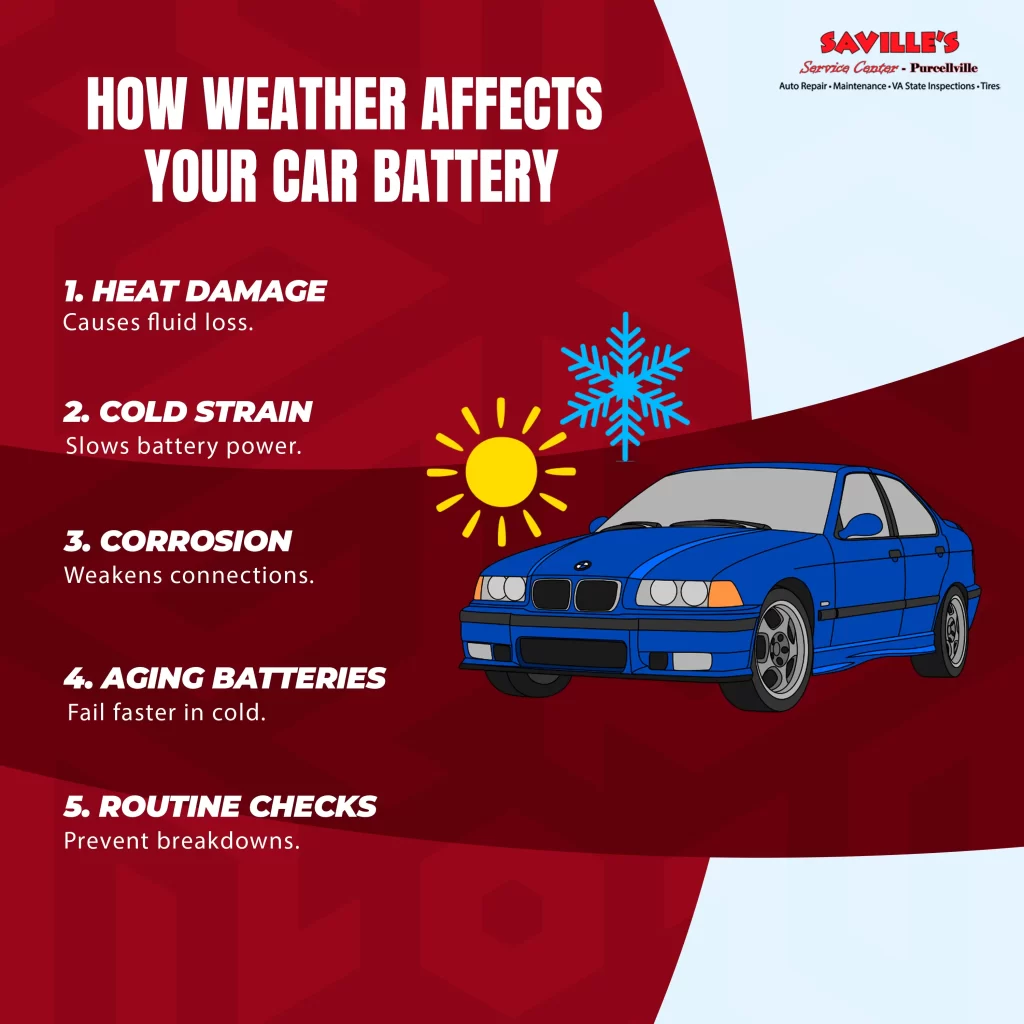
- High temperatures accelerate fluid evaporation, leading to decreased fluid levels and potential overheating in car batteries.
- Extreme heat increases corrosion on battery terminals, impacting electrical connections and performance.
- Cold temperatures significantly reduce battery cranking power and increase internal resistance, making it more difficult for the engine to start.
- Chemical reactions slow down in cold weather, diminishing battery efficiency and capacity.
- Regular maintenance checks and seasonal inspections can help mitigate temperature-related battery issues.
Why Temperature Has a Big Impact on Your Car Battery
Temperature plays an essential role in how your car battery functions because it relies on chemical reactions to generate power. Extreme heat can cause these reactions to speed up, leading to reduced efficiency, while cold temperatures can slow them down considerably. Understanding how both ends of the temperature spectrum impact your battery can help you maintain its performance.
How batteries rely on chemical reactions to produce power
When you turn the key in your ignition, your car’s battery relies on intricate chemical reactions to generate the power needed to start the engine. These reactions involve the movement of ions between the battery’s electrodes, producing electrical energy. However, temperature plays an essential role in this process. Extreme heat can increase the rate of these reactions, but it can also lead to faster degradation of battery materials, negatively impacting battery lifespan. Conversely, cold temperatures slow down the chemical reactions, reducing the battery’s ability to deliver power efficiently. Understanding how temperature affects these reactions can help you take better care of your battery and extend its lifespan, ensuring reliable performance in all weather conditions.
Why both heat and cold can reduce battery efficiency
Extreme temperatures can significantly impact your car battery’s performance and efficiency. Both heat and cold have detrimental effects on battery health that you should be aware of. In hot weather, high temperatures can cause the electrolyte inside the battery to evaporate, leading to reduced capacity and potential damage. Conversely, cold weather slows down the chemical reactions necessary for power generation, making it harder for your battery to start your engine. The effects of climate on car battery health are significant; even moderate temperature fluctuations can shorten battery life. By understanding how temperature extremes affect your battery, you can take proactive steps, like regular maintenance checks, to guarantee it remains in good condition year-round.
The Effects of Hot Weather on Your Car Battery
Hot weather can significantly impact your car battery, accelerating fluid evaporation and potentially causing damage. You might also notice increased corrosion from the heat, which can shorten your battery’s lifespan. To keep your battery in top shape during the summer, it’s important to follow some simple preventative maintenance tips.
How high temperatures accelerate fluid evaporation
Have you ever wondered how soaring temperatures impact your car battery? High temperatures can considerably accelerate fluid evaporation within the battery. When it gets hot outside, the electrolyte solution inside your battery can begin to boil off, leading to a decrease in fluid levels. This evaporation can cause the internal components to overheat and may even result in permanent damage. For ideal battery maintenance in extreme heat, it’s essential to regularly check the fluid levels and top them off as necessary. Keeping your battery well-maintained can help mitigate the effects of heat and prolong its lifespan. So, don’t forget to monitor your battery during those scorching summer days to avoid unexpected failures on the road.
Corrosion and internal damage caused by heat exposure
As temperatures rise, the risk of corrosion and internal damage to your car battery increases considerably. Heat can cause corrosion buildup on battery terminals, leading to poor connections and reduced power. When the battery gets too hot, the chemicals inside can become unstable, resulting in internal damage that weakens its overall performance. You might notice signs like swelling or leaking, indicating that the battery’s integrity is compromised. In extreme cases, this can even lead to complete battery failure. It is crucial to keep an eye on your battery during hot weather and address any signs of corrosion promptly. Ignoring these issues can leave you stranded and facing unexpected replacement costs.
Preventative maintenance tips for summer driving
When summer temperatures soar, it’s crucial to prioritize your car battery’s health to avoid unexpected breakdowns. Start by checking the battery terminals for corrosion and cleaning them if needed. Verify your battery is securely mounted to prevent vibrations that can damage it. Additionally, consider having your battery tested before hitting the road for long trips. Keeping your battery charged can help prevent battery drain in cold weather when temperatures drop again. Also, park in shaded areas or use a sunshade to keep the interior cooler, reducing stress on the battery. Finally, regularly inspect the battery’s age and replace it if it’s nearing the end of its lifespan. Taking these steps can keep you safe and your vehicle running smoothly all summer long.
How Cold Weather Drains Battery Power
When the temperature drops, your car battery’s cranking power takes a hit, making it harder to start your engine. Thicker engine oil and slower chemical reactions in the battery only add to the struggle. If your battery is older, it’s even more at risk of failing when the cold sets in.
Reduced cranking power in freezing temperatures
Cold weather can significantly drain your car battery’s power, leading to reduced cranking ability when you need it most. When temperatures drop, you might encounter several cold-weather battery performance issues, including:
- Increased resistance: Cold temperatures cause the battery’s internal resistance to rise.
- Slower chemical reactions: The chemical processes within the battery slow down considerably.
- Reduced capacity: Batteries lose a portion of their capacity in freezing conditions.
- Higher demand: Your engine requires more power to start in cold weather.
These factors combine to make it harder for your battery to deliver the energy required for a successful start. So, if it’s freezing outside, be prepared for potential challenges with your vehicle’s cranking power.
Thicker engine oil and slower chemical reactions in the battery
As temperatures plummet and your battery struggles with reduced cranking power, other factors come into play that can further complicate starting your vehicle. One key issue is thicker engine oil, which increases friction and makes it harder for your engine to turn over. In colder weather, this viscosity can create a significant drag on your battery’s output. Additionally, slower chemical reactions in the battery can reduce its efficiency, making it less effective at providing the power needed to start your engine. To avoid getting stranded, it’s essential to schedule regular car battery inspections and testing, ensuring that both your battery and engine oil are in prime condition for those frigid mornings.
Why older batteries are more likely to fail in winter
While you might not think about it often, the age of your car battery plays an essential role in its performance during the winter months. Older batteries are more likely to fail in winter due to several factors:
- Decreased capacity: As batteries age, their ability to hold a charge diminishes.
- Increased internal resistance: Older batteries have higher resistance, making it harder to draw power.
- Corrosion buildup: Over time, corrosion can occur on terminals, which affects the electrical flow.
- Chemical degradation: The electrolyte inside can degrade, resulting in reduced efficiency.
These elements contribute to why car batteries fail in winter, leaving you stranded when you need your vehicle most. Regular maintenance and timely replacements can help avoid these cold-weather woes.
Tips to Protect Your Battery Year-Round
To keep your car battery in top shape year-round, regular inspections and voltage testing are essential. You should also clean the terminals and check for any signs of corrosion. Additionally, replacing aging batteries before extreme weather strikes can prevent unexpected failures.
Routine inspections and voltage testing
Regular inspections and voltage testing can significantly extend the life of your car battery, especially in extreme temperatures. By scheduling seasonal battery check services, you can catch potential issues early. Here are four key steps to contemplate:
- Visual Inspection: Check for any signs of wear or damage on the battery casing.
- Voltage Testing: Use a multimeter to ascertain that your battery’s voltage is within the normal range.
- Load Testing: Assess the battery’s ability to hold a charge under stress.
- Professional Help: Don’t hesitate to consult a qualified technician for thorough diagnostics.
Cleaning terminals and checking for corrosion
Since maintaining clean battery terminals is essential for ideal performance, checking for corrosion should be a routine part of your vehicle care. Corrosion can hinder electrical flow, leading to starting issues and reduced battery life. To clean your terminals, start by disconnecting the cables—negative first, then positive. Use a mixture of baking soda and water to scrub away corrosion with a wire brush. Rinse and dry thoroughly before reconnecting the cables, guaranteeing a snug fit. For proper battery storage and care, consider applying a thin layer of petroleum jelly to the terminals afterward. This will help prevent future corrosion and guarantee your battery performs well, regardless of temperature extremes. Regular maintenance keeps your battery in top shape all year round.
Replacing aging batteries before extreme weather hits
Before extreme weather strikes, replacing aging batteries can save you from unexpected breakdowns and costly repairs. Here are some tips to help you assess your battery’s condition and find a reliable battery replacement near me:
- Check the age: If your battery’s over three years old, consider replacing it.
- Inspect for wear: Look for signs of corrosion or swelling, which indicate it’s time for a change.
- Test performance: Use a multimeter to check voltage; anything below 12.4 volts means it’s time to think about replacement.
- Schedule inspections: Regularly have your battery checked during maintenance to catch issues early.
Staying proactive will keep you on the road and ready for whatever the weather brings!
Keep Your Vehicle Reliable with Saville’s Service Center
When it comes to keeping your vehicle reliable, Saville’s Service Center has you covered. With expert battery testing, maintenance, and replacement, their local technicians guarantee your car is ready for any season. Don’t wait—contact Saville’s today to schedule your battery inspection and stay safe on the road.
Expert battery testing, maintenance, and replacement services
To keep your vehicle reliable, it’s essential to prioritize expert battery testing, maintenance, and replacement services. At Saville’s Service Center, our ASE-certified technicians guarantee your battery performs at its best, especially in extreme temperatures. Here’s how we help:
- Comprehensive Testing: We assess your battery’s health, checking for any signs of weakness.
- Routine Maintenance: Regular checks and cleaning of terminals prevent corrosion and extend battery life.
- Expert Recommendations: We provide tailored advice on when to replace your battery based on its condition and your driving habits.
- Quality Replacements: If necessary, we provide OEM battery replacements to ensure reliability and optimal performance.
Local technicians who ensure your vehicle is ready for any season
At Saville’s Service Center, our local technicians are dedicated to making sure your vehicle is equipped to handle any season, from scorching summers to frigid winters. We recognize that extreme temperatures can lead to hot weather car battery problems, affecting your vehicle’s performance. That’s why our ASE-certified team conducts thorough inspections and provides preventative maintenance tailored to your car’s needs. Whether it’s checking your battery’s charge or ensuring your cooling system is functioning properly, we’ve got you covered. By trusting us with your vehicle, you can rest assured that we’ll help you avoid unexpected breakdowns and keep your car reliable year-round. Your safety and peace of mind are our top priorities. Let us keep you on the road!
Contact Saville’s Service Center today to schedule your battery inspection and stay safe on the road
Keeping your vehicle reliable in extreme temperatures is essential, and Saville’s Service Center is here to help. Our expert team can guarantee your battery is ready to handle the heat, optimizing charging system performance in heat. Here’s how we can assist you:
- Battery Inspection: We’ll check for any signs of wear or damage.
- Charging System Evaluation: Our technicians will assess your vehicle’s entire charging system.
- Battery Replacement: If necessary, we’ll recommend the best battery for your needs.
- Preventive Maintenance: We provide tailored advice to help you avoid future issues.
Contact Saville’s Service Center today to schedule your battery inspection and stay safe on the road. Let’s keep your vehicle running smoothly!
2/2
Extreme temperatures can significantly impact your car battery’s performance and lifespan. When faced with extreme heat or cold, you might notice signs of a weak car battery. For instance, if your engine struggles to start or if you hear a clicking sound when turning the key, these could be red flags. Additionally, dimming headlights while idling or electronic components acting erratically may signal battery issues. Extreme cold can slow down the chemical reactions needed for battery operation, while heat can accelerate corrosion, both leading to premature failure. Keeping an eye on these signs can help you address potential problems before they leave you stranded. Regular checks and maintenance can guarantee your battery remains reliable in any temperature.
Frequently Asked Questions
How Do I Know if My Battery Needs Replacement?
You’ll know your battery needs replacement if your engine struggles to start, you notice a dimming dashboard light, or the battery warning light appears. Testing it at a service center can provide a definitive answer.
Can Extreme Temperatures Damage My Battery Permanently?
Yes, extreme temperatures can damage your battery permanently. High heat can cause corrosion, while extreme cold can reduce capacity. Regular checks and maintenance can help prolong your battery’s life in varying weather conditions.
What Signs Indicate Battery Issues in Hot Weather?
In hot weather, watch for signs like slow engine cranking, dim headlights, or a swollen battery case. If you notice corrosion around terminals or frequent jump-starts, it’s time to check your battery’s health.
How Often Should I Check My Battery Health?
You should check your battery health every six months, unless you enjoy the thrill of surprise breakdowns. Treat it like a relationship—regular check-ins prevent drama and keep things running smoothly. Don’t ignore those warning signs!
Are Certain Battery Brands More Resistant to Temperature Extremes?
Yes, some battery brands are designed to withstand temperature extremes better than others. Look for those with enhanced features like improved insulation or advanced technology, which can help maintain performance in both hot and cold conditions.
Conclusion
So, what’s the bottom line? Your car battery’s performance hinges on the temperature, and neglecting this can lead to unexpected breakdowns when you least expect them. Whether you’re facing scorching heat or frigid cold, your battery’s health is at stake. But don’t wait until you’re stranded on the side of the road to take action. With a few simple precautions, you can guarantee your battery stays strong year-round. Are you ready to protect your ride?