
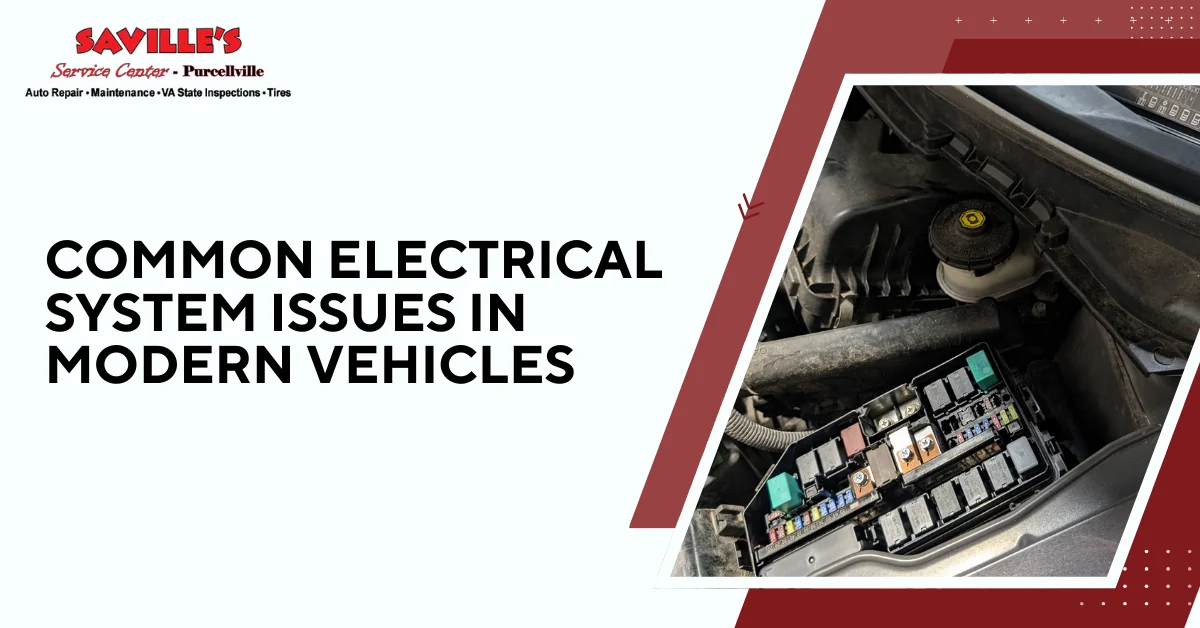
Common electrical system issues in modern vehicles usually come down to battery and alternator problems, bad wiring, or electronics that stop working like they should (power windows, locks, screens, and infotainment). The easiest clue is dashboard warning lights that pop on and stay on; your car is telling you something’s wrong. If you need expert auto electrical repair in Purcellville, VA, loose or corroded connections and failing modules are exactly the kinds of issues a shop can test and fix. Regular maintenance helps catch them early before they turn into expensive repairs.
Key Takeaways
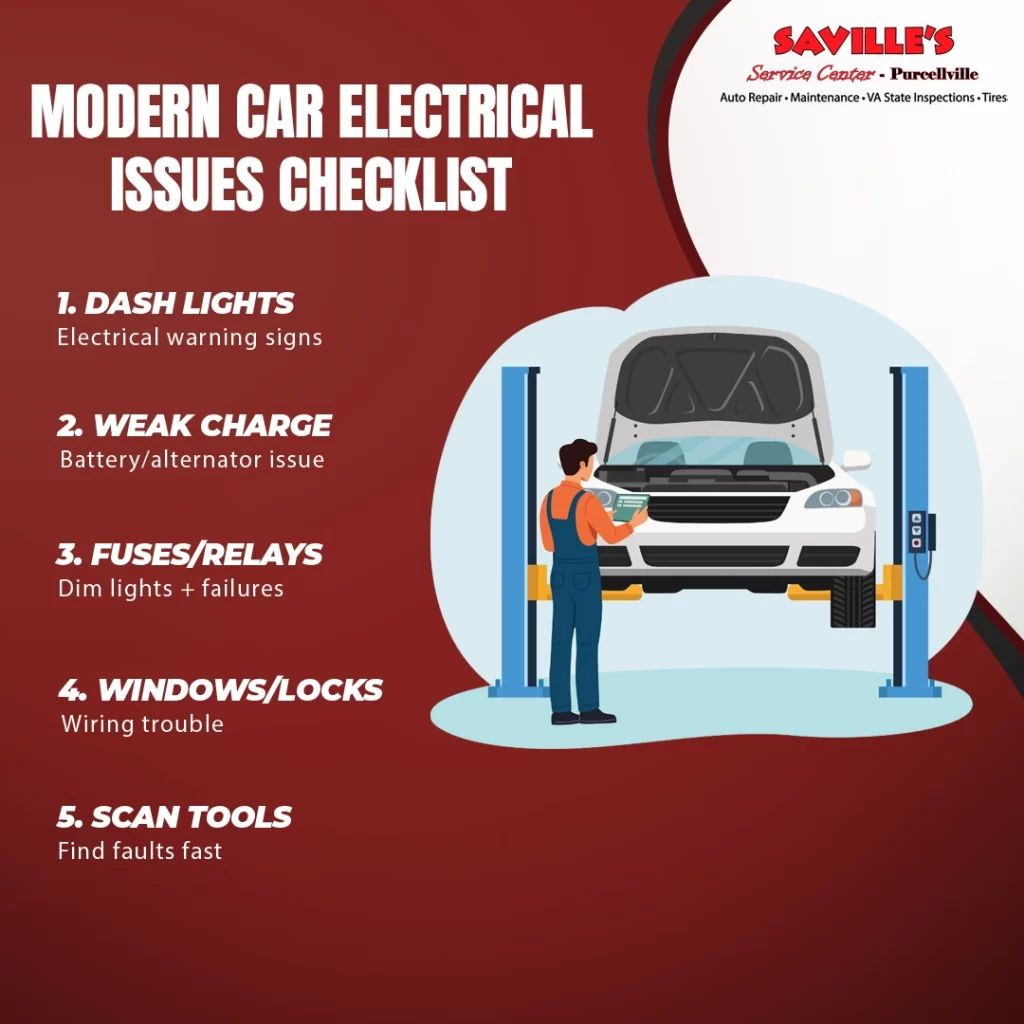
- Dashboard warning lights, such as the Check Engine Light, indicate various electrical system issues that need immediate attention.
- Common failures include faulty power windows, door locks, and infotainment systems due to wiring or switch malfunctions.
- Battery-related problems can arise from faulty alternators or corroded connections, affecting overall vehicle performance.
- Dimming lights often signal blown fuses or bad relays, leading to potential system disruptions.
- Regular maintenance and expert diagnostics are essential for identifying and resolving electrical issues before they escalate.
Why Electrical Problems Are More Common in Modern Cars
In today’s vehicles, the increased reliance on electronics means there are more systems that can potentially fail. With complex wiring harnesses becoming more common, issues can arise from connections and components that weren’t as prevalent in older models. Understanding these challenges can help you better navigate electrical problems in your car.
How electronics-heavy systems increase failure points
As cars have evolved to incorporate more advanced electronic systems, the complexity of their wiring and components has increased markedly, increasing the likelihood of electrical issues. You might notice that these electronics-heavy systems create more potential failure points, making it easier for something to go wrong. For instance, wiring harness problems in modern electronics-heavy cars can stem from poor connections, wear and tear, or environmental factors. Each additional component adds to the intricate web of wiring, which can lead to shorts and malfunctions. In addition, the reliance on various sensors and modules means that a single failure can affect multiple systems, compounding the problem. It’s vital to stay vigilant and address any electronic issues early to avoid larger problems down the road.
Wiring harness problems in today’s technology-driven vehicles
While advancements in automotive technology have brought many benefits, they’ve also made wiring-harness problems more prevalent. These issues can lead to a range of electrical failures, impacting your vehicle’s performance. Here are some common wiring harness problems you might encounter:
- Frayed Wires: Exposure to heat and moisture can cause insulation to wear down.
- Corrosion: Electrical connections may corrode, affecting signal transmission.
- Short Circuits: Damaged wiring can lead to shorts, triggering warning lights or complete system failures.
If you’re facing wiring harness problems in today’s technology-driven vehicles, it’s essential to seek help. Saville’s Service Center offers expert automotive electrical system repair in Purcellville, VA, ensuring your vehicle operates smoothly and reliably. Don’t hesitate to get your vehicle checked!
Battery, Starter, and Alternator Issues Explained
When it comes to your vehicle’s electrical system, battery, starter, and alternator issues can really impact reliability. If there’s a problem with the charging system, you might find yourself stranded with a no-start situation. Understanding these components is key to keeping your car running smoothly.
How charging system problems affect vehicle reliability
Charging system problems can greatly impact your vehicle’s reliability, often leading to frustrating breakdowns and unexpected repairs. When your charging system fails, you may experience issues such as:
- Diminished battery life – A faulty alternator can cause your battery to drain quickly, leaving you stranded.
- Starter problems – Insufficient power from the battery can prevent your starter from engaging, making it difficult to start your vehicle.
- Electrical failures – A weak charging system can lead to malfunctioning lights, power windows, and other electrical components.
To guarantee your vehicle runs smoothly, it’s essential to address these issues promptly. For thorough charging system diagnostics at Saville’s Service Center, trust the ASE-certified technicians to identify and resolve any problems efficiently.
When electrical faults cause no-start conditions
Electrical faults can lead to frustrating no-start conditions, often stemming from issues with the battery, starter, or alternator. When electrical issues cause no-start conditions, it typically means your battery is dead or weak, preventing the starter from engaging. If the battery’s fine, the starter itself could be the culprit, possibly due to a malfunction or faulty connections. Additionally, the alternator might not be charging the battery correctly, leading to power loss over time. To troubleshoot, check for any dashboard warning lights, listen for clicks when turning the key, and verify all connections are secure. If you’re unsure, getting help from a trusted mechanic can save you time and hassle, making sure your vehicle’s electrical system is in top shape.
Dashboard Warning Lights and Electrical Faults
When you’re driving, dashboard warning lights can signal important issues with your vehicle’s electrical system. Understanding what these lights mean is vital for timely maintenance, and using advanced scan tools can help pinpoint specific problems. Ignoring these warnings could lead to more significant issues down the road, so it’s essential to pay attention.
What common warning lights mean for modern vehicles
Modern vehicles are equipped with a variety of dashboard warning lights designed to alert you to potential issues before they become serious problems. Understanding these dashboard warning lights can help you address electrical faults promptly. Here are three common warning lights you might encounter:
- Check Engine Light: This light can indicate a range of issues, from minor to serious, including electrical faults.
- Battery Warning Light: If this light comes on, it may signal problems with your vehicle’s electrical system or battery.
- Oil Pressure Light: This warns you of low oil pressure, which can lead to engine damage if not addressed immediately.
Don’t ignore these dashboard warning lights; they’re your vehicle’s way of communicating essential maintenance needs.
Using advanced scan tools to pinpoint electrical issues
Advanced scan tools have revolutionized the way technicians diagnose electrical issues in vehicles. With advanced scan tool diagnostics for car electronics, you can quickly identify the root cause of dashboard warning lights and other electrical faults. These tools interface directly with your vehicle’s computer systems, providing real-time data and fault codes that traditional methods can’t match. When you notice a warning light, a skilled technician can use these tools to pinpoint issues like faulty sensors or wiring problems, saving you time and money. By utilizing advanced diagnostics, you guarantee that repairs are accurate and efficient, ultimately enhancing your vehicle’s performance and reliability. Trust in these technologies to help keep your car running smoothly.
Common Component Failures in Vehicle Electrical Systems
When it comes to electrical systems in your vehicle, common component failures can really disrupt your driving experience. You might encounter blown fuses or faulty relays, which can lead to issues with power windows, door locks, and other accessories. Recognizing these problems early can save you time and hassle down the road.
Blown fuses and bad relays in modern cars
Electrical systems in vehicles can be particularly sensitive, often leading to issues like blown fuses and bad relays that disrupt performance. If you notice dimming lights or malfunctioning accessories, it might be due to one of these common problems. Here are three things to check:
- Blown Fuses: These protect your electrical circuits and can cause systems to fail when they blow.
- Bad Relays: Relays control larger electrical loads, and if they fail, it can lead to issues in critical systems like ignition or fuel.
- Corroded Connections: Verify all electrical connections are clean and secure, as corrosion can lead to intermittent failures.
Addressing blown fuses and faulty relays in today’s vehicles promptly can prevent further damage and keep your ride running smoothly.
Power window, door lock, and accessory failures
Power windows, door locks, and various accessories are essential components of modern vehicles that enhance convenience and safety. However, you might encounter electrical issues with the power windows and door locks that can disrupt your daily driving experience. These problems often stem from faulty switches, broken wiring, or malfunctioning motors. When your power windows won’t budge or your door locks refuse to engage, it can be frustrating and even compromise your security. Regular maintenance can help prevent these failures, but if you notice any signs of malfunction, it’s crucial to get them checked out promptly. Addressing these issues early can save you time and money in the long run, ensuring your vehicle remains reliable and comfortable.
Infotainment and Interior Electronics Problems
When it comes to infotainment and interior electronics, you might encounter issues like touchscreen glitches or complete system failures. It’s essential to determine whether these problems stem from software or hardware malfunctions. Understanding the root cause can help you find the right solution and get your vehicle’s tech back on track.
Touchscreen glitches and infotainment system failures
As you rely more on your vehicle’s infotainment system for navigation, entertainment, and connectivity, experiencing touchscreen glitches or system failures can be incredibly frustrating. These issues are common in newer vehicles, often disrupting your driving experience. Here are three common problems you might encounter:
- Unresponsive Touchscreen: Sometimes, the screen may freeze or fail to register your touch, making it hard to use essential functions.
- System Restarts: You may notice your infotainment system randomly rebooting, interrupting music and navigation.
- Bluetooth Connectivity Issues: Difficulty connecting your smartphone to the system can hinder hands-free calls and streaming.
Addressing these infotainment and touchscreen glitches promptly can enhance your driving experience and guarantee you stay connected on the road.
Diagnosing software vs. hardware-related electrical issues
Though diagnosing electrical issues in your vehicle can seem challenging, distinguishing between software and hardware-related problems is essential for effective repairs. Software issues often manifest as glitches in your infotainment system, while hardware problems might involve wiring or component failures. When you notice persistent issues, it’s vital to start with a thorough software update before jumping to hardware fixes. If you suspect a parasitic battery drain, a diagnosis near Purcellville can pinpoint the source of the problem. Understanding these differences can save you time and prevent unnecessary repairs. If your vehicle’s electronics are acting up, consult a professional who can accurately assess whether the issue lies within the software or hardware domain.
Preventing Costly Electrical Repairs with Routine Maintenance
To keep your vehicle running smoothly and avoid costly electrical repairs, regular maintenance is key. By identifying parasitic battery drains early, you can prevent bigger issues down the road. Plus, routine inspections can greatly reduce long-term repair costs, saving you both time and money.
Identifying parasitic battery drains early
Identifying parasitic battery drains early can save you from costly electrical repairs down the line. These drains can occur when electrical components continue to draw power after you’ve turned off your vehicle, leading to a dead battery. To prevent this issue, consider the following tips for preventing costly electrical repairs with maintenance:
- Regularly check battery connections: Verify terminals are clean and tightly secured to avoid unexpected drains.
- Monitor electrical components: Pay attention to lights, radios, or other devices that may not turn off completely.
- Schedule routine inspections: Have a professional check for parasitic drains during regular maintenance visits.
Why regular inspections reduce long-term repair costs
Regular inspections can greatly reduce long-term repair costs by catching potential electrical issues before they escalate. With regular check-ups, you’re more likely to identify common electrical problems in modern cars, like faulty wiring or battery issues, early on. This proactive approach allows you to address minor repairs before they lead to costly fixes or even complete system failures. For instance, a small parasitic drain on your battery can be easily resolved during routine maintenance, saving you from a dead battery down the line. Plus, regular inspections help maintain your vehicle’s overall health, ensuring that it runs efficiently. Ultimately, staying on top of your vehicle’s electrical system can lead to significant savings and peace of mind.
Get Expert Electrical Diagnostics and Repair at Saville’s Service Center
When it comes to electrical issues in your vehicle, seeking expert diagnostics and repair is essential for ensuring your car runs smoothly and safely. At Saville’s Service Center, you’ll find ASE-certified technicians ready to tackle battery, starter, and alternator issues explained in detail. Here’s what you can expect:
- Thorough diagnostics to identify underlying problems
- Transparent estimates and no hidden fees
- Quality repairs using OEM parts for lasting reliability
With a commitment to exceptional service, Saville’s emphasizes trust and precision. Plus, enjoy customer-focused amenities, making your visit convenient and stress-free. Whether it’s a simple battery check or complex alternator repairs, your vehicle’s electrical system will be in expert hands. Contact Saville’s Service Center for all your automotive needs!
Frequently Asked Questions
How Can I Tell if My Vehicle Has an Electrical Issue?
If you notice warning lights, flickering headlights, or electrical components malfunctioning, your vehicle might have an electrical issue. You might also experience difficulty starting or unusual battery drain. It’s best to get it checked promptly.
What Are the Signs of a Failing Electrical System?
If your car’s acting like it’s stuck in the Stone Age, look for dimming lights, flickering displays, or trouble starting. You might also notice strange noises or malfunctioning accessories—signs your electrical system’s failing.
Can I Drive My Car With Electrical Problems?
You shouldn’t drive your car with electrical problems. It can lead to further damage and safety hazards. It’s best to get the issues diagnosed and repaired by a professional to guarantee your vehicle’s reliability.
How Often Should I Have My Electrical System Inspected?
About 60% of vehicle breakdowns stem from electrical issues. You should have your electrical system inspected at least once a year, or more often if you notice any unusual symptoms, like dimming lights or inconsistent starts.
Are Electrical Repairs Covered Under Warranty?
Yes, electrical repairs are usually covered under warranty, but it depends on the specific terms of your warranty. Always check your warranty documents or consult your dealer to confirm coverage details for your vehicle.
Conclusion
To sum up, understanding common electrical issues in your vehicle can save you time and money down the road. Just like a lighthouse guiding ships through fog, being aware of warning signs helps navigate potential problems before they become major headaches. Whether it’s a battery issue or a malfunctioning sensor, staying proactive with maintenance guarantees your car remains reliable. So, keep an eye on those lights and don’t hesitate to seek expert help when needed at Saville’s Service Center!