
A new vibration after tire rotation often means a tire or wheel condition became easier to notice in its new position. It does not automatically mean the rotation caused damage.
Drivers may notice the vibration during a Route 7 commute or only at a specific highway speed. The timing and location can provide useful clues. However, an inspection is still needed to confirm the cause.
At Saville’s Service Center, we can determine whether balancing or another correction is appropriate.
Why Vibration After Tire Rotation Can Begin
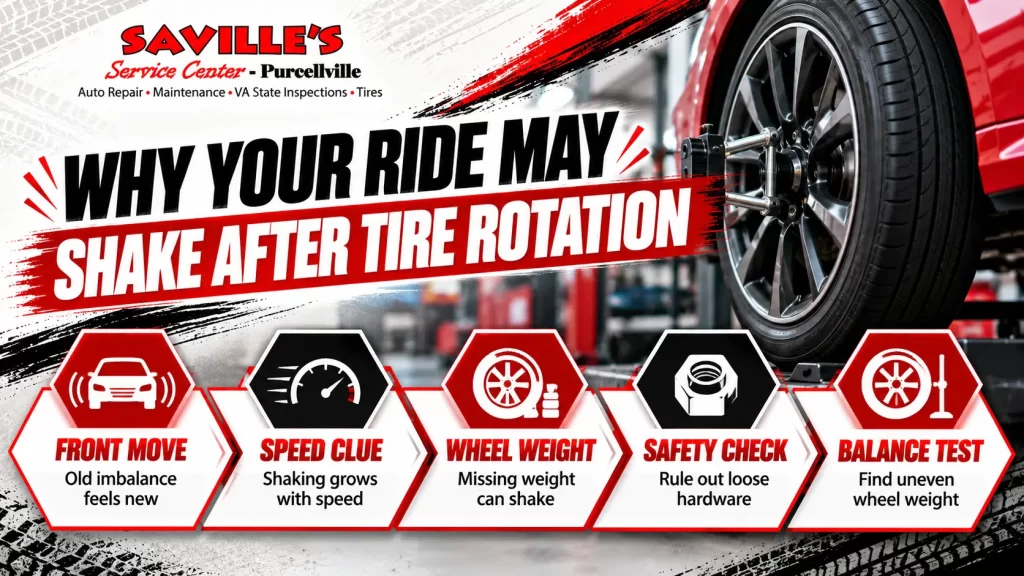
Vibration after tire rotation can begin when a tire with a small existing problem moves to a position where you feel it more clearly. Rotation changes each tire’s location, not its weight distribution or physical condition.
Moving a Tire Can Make an Existing Imbalance More Noticeable
A slightly unbalanced rear tire may create little feedback through the steering wheel. Once that tire moves to the front, the same imbalance can produce steering wheel vibration after tire rotation, especially as speed increases.
Our tire rotation and inspection includes attention to tread wear, inflation, and visible concerns. Rotation supports even wear, while balancing addresses uneven weight around the assembly.
A Lost Wheel Weight Can Create a New Shake
A wheel weight can loosen or fall off before, during, or after service. Even a small change in weight can become noticeable as the wheel spins faster.
The same symptom may follow a pothole impact or debris buildup inside a wheel. Western Loudoun roads include rough edges and changing pavement, so the service timing may be only part of the story.
What the Location and Speed of the Vibration Can Tell You
Where you feel the shake and when it appears can help narrow the inspection. These clues do not prove the cause, but they help a technician reproduce the concern.
Steering Wheel Shake Often Points Toward the Front
A shake felt mainly through the steering wheel often involves a front tire or wheel. Imbalance may become clearer within a certain speed range.
If your car shakes after tire rotation only during braking, acceleration, or turns, the cause may extend beyond balance. Brake, axle, or suspension concerns can create other patterns.
Seat or Floor Vibration May Come From the Rear
A rear tire or wheel concern may be felt through the seat, floor, or body. Note whether the vibration starts near 45, 55, or 65 mph.
Virginia’s vehicle safety inspection overview includes tires, wheels, rims, steering, and suspension. Several components can create similar feedback.
When Wheel Balancing May Solve the Problem
Wheel balancing may solve a speed-related shake when uneven weight is the cause. The process measures the assembly and identifies where corrective weight is needed.
How a Technician Checks Wheel Balance
A technician mounts the wheel on balancing equipment and spins the assembly. The machine identifies where corrective weight is needed.
Our wheel balancing in Purcellville, VA, service uses computerized equipment for cars, trucks, and SUVs. The result is then compared with the original symptom.
Why Balancing and Alignment Are Different
Balancing corrects uneven weight around a rotating tire and wheel. Alignment adjusts suspension angles so the wheels point and contact the road as intended.
A pulling vehicle, off-center steering wheel, or uneven tread wear may call for alignment checks. A speed-specific shake more often starts with balance testing.
Other Problems to Rule Out After a Tire Rotation
Not every new vibration comes from imbalance. A careful post-service check should also review wheel mounting, inflation, tread condition, and visible damage.
Wheel Seating and Lug Hardware
A wheel must sit flat against the hub, with lug hardware tightened to specification. Rust, debris, or damaged hardware can prevent correct seating.
A strong shake with a clunk or wobble should be checked before normal driving continues. Mounting and hardware must be confirmed before balancing.
Tire Pressure, Wear, and Damage
Pressure differences, cupping, tread separation, bent wheels, and tire damage can cause vibration. Moving irregular wear to another axle may make it easier to notice.
Our summer car maintenance checklist for long road trips covers tire pressure, tread depth, and spare-tire readiness. Those checks help before extended Route 7 or Northern Virginia driving.
What Purcellville Drivers Should Do Next
Note the conditions that trigger the shake, then arrange an inspection if it persists. Clear details help focus the initial checks.
Note When and Where the Vibration Happens
Record the speed range, where you feel it, and whether braking or acceleration changes it. Note any pressure warning or pulling.
Ford trucks and SUVs show the same balance clues as other vehicles. Our Ford tire services and alignments cover models such as the F-150, Explorer, Escape, and Edge.
Arrange an Inspection When the Change Is Sudden or Strong
A mild speed-specific vibration may allow a careful trip to the shop. Worsening movement, thumping, pulling, or a loose-wheel sensation calls for a prompt stop.
Our team can review your recent tire rotation service in Purcellville, VA, and check balance, pressure, mounting, and tire condition. Contact our Purcellville shop with the speed and location of the vibration.
Takeaways
A vibration after tire rotation may reveal an existing imbalance in a new tire position. A missing wheel weight can also cause a speed-related shake, but other tire and wheel concerns must be ruled out.
Balancing corrects uneven weight, while alignment addresses wheel angles. Have a strong, sudden, or worsening shake inspected before normal driving continues.
Frequently Asked Questions
Is vibration normal after a tire rotation?
No, a new vibration is not an expected result of tire rotation. The service may reveal an existing imbalance or tire condition, so persistent symptoms should be checked.
Can rotating tires cause them to become unbalanced?
No, changing tire positions does not normally alter wheel balance. A missing weight or unnoticed imbalance may become easier to feel after a tire moves forward.
How can I tell whether the front or rear wheels are causing the vibration?
Steering wheel shake often points toward the front, while movement through the seat or floor may involve the rear. A balance test is still needed to confirm the source.
Will a wheel alignment fix a vibration after tire rotation?
A wheel alignment will not usually fix a vibration after tire rotation because alignment corrects wheel angles rather than wheel balance. Alignment may be relevant if the vehicle pulls, the steering wheel sits off-center, or the tires wear unevenly.
Is it safe to drive when the car starts shaking after a tire rotation?
It may be safe to drive with a mild vibration, but severe or worsening shaking after a tire rotation can make continued driving unsafe. Stop driving if the shake includes thumping or pulling, or if it feels like a wheel is loose.
Schedule a Tire and Wheel Check in Purcellville, VA
Saville’s Service Center can inspect a post-rotation vibration and explain whether balancing or another correction is needed. Call (540) 338-5749 to schedule service.
Our shop is located at 37251 E Richardson Ln, Unit B, Purcellville, VA 20132. We serve drivers from Purcellville, Round Hill, Hamilton, Waterford, and nearby Western Loudoun communities.