If your brakes take longer to stop after rain, first slow down and decide whether the change comes from wet pavement or the brake system itself. Heavy rain reduces tire grip and can briefly wet brake surfaces, but a delay that continues after conditions improve needs attention. Saville’s Service Center provides brake repair in Purcellville, VA, for drivers who notice a lasting change in stopping response.
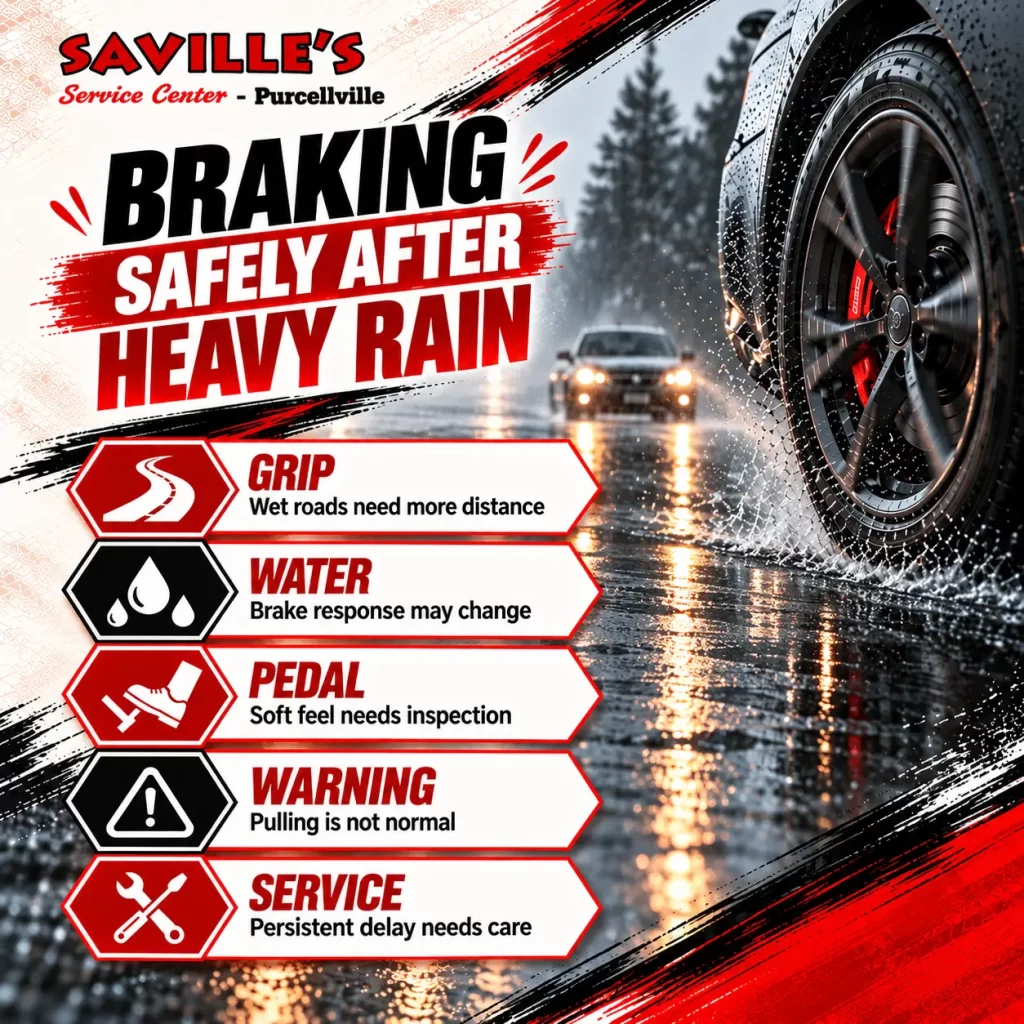
Why Brakes Can Feel Slower After Heavy Rain
Heavy rain changes the contact between your tires, brakes, and road. The result may feel like weak brakes even when the main problem is reduced traction. Water can also reveal wear that was less noticeable in dry weather.
Wet Pavement Reduces Available Tire Grip
A longer stopping distance on wet roads is expected because tires have less grip. The Virginia Driver’s Manual explains that wet pavement can double braking distance. Speed, tread depth, tire pressure, visibility, and standing water all affect how much room you need.
On Route 7 or Route 9, spray from traffic can hide pooled water and reduce visibility before you notice a change in traction. Slow down early, leave more space, and make smooth steering and braking inputs. If the tires begin to hydroplane, pressing harder on the brake pedal cannot create the grip that the tires have lost.
Water Can Briefly Affect Brake Surfaces
Wet brakes after heavy rain may respond differently for the first few applications, especially after the car passes through standing water. A thin film of water on the rotor surface can briefly change friction. The response should become normal again as the surfaces clear and dry.
When traffic and road conditions allow, test the brakes gently at low speed after leaving deep water. If the pedal, stopping distance, or vehicle direction still feels wrong, move to a safe place and arrange an inspection.
When Longer Stopping Points to a Brake Problem
A brake problem is more likely when the symptom lasts beyond the rain or appears with noise, vibration, pulling, a warning light, or a changed pedal feel.
Watch for Symptoms That Continue After the Car Dries
Worn pads, glazed friction material, uneven rotors, sticking calipers, or damaged hardware can reduce consistent braking. Water and road grit may also make existing corrosion or surface problems more noticeable. Saville’s Service Center’s complete brake system service covers inspection and diagnosis of these parts.
Pay attention to whether the delay affects every stop or only the first one after a puddle. Also note pedal travel, sound, vibration, and whether the car pulls. These details help separate a brief wet-surface effect from signs of brake problems in rain that indicate a need for repair.
Know When to Stop Driving
Stop driving as soon as you can safely do so if the pedal sinks toward the floor, braking response is severely reduced, or the car pulls sharply. The same applies to grinding, visible fluid near a wheel, smoke, a burning smell, or a red brake warning light that stays on.
Do not depend on repeated pedal pumping or continued driving to correct a serious symptom. Park away from moving traffic and arrange towing when the car cannot stop predictably. A controlled inspection is safer than testing a failing brake system on Western Loudoun roads.
What a Wet-Weather Brake Inspection Should Check
A useful inspection checks the entire braking path from the pedal to the tires. The goal is to find the reason for the changed response, not to replace parts based only on the weather.
Pads, Rotors, Calipers, and Hardware
A technician should measure pad thickness and inspect rotor condition, caliper movement, slide pins, and mounting hardware. Uneven wear can make one wheel respond differently from another. Rust ridges, glazing, heat damage, or contaminated friction surfaces can also change how smoothly the brakes engage.
If you also hear repeated noise after the rain ends, check out Saville’s Service Center’s guide to recurring brake squeal in Purcellville. It explains how moisture differs from wear, glazing, or loose hardware.
Brake Fluid, Hydraulic Parts, and ABS
The hydraulic system should hold firm pressure without leaks. A soft or sinking pedal can point to air, a leak, a failing component, or another hydraulic concern. Brake fluid condition also matters because old fluid can contain moisture over time, although one rainstorm does not normally enter a sealed system.
A technician may also scan the anti-lock braking system when a warning light is on or wheel behavior feels uneven. Sensors, wiring, tone rings, and control faults can affect how the system responds on slick pavement.
Tires and Other Factors That Change Stopping Distance
Brakes can only slow the wheels; the tires must transfer that force to the road. Low tread, poor pressure, mismatched tires, or damaged rubber can make wet stopping feel worse. Suspension wear and alignment problems may also reduce stable contact during braking.
Saville’s Service Center explicitly services Toyota cars, SUVs, and trucks, including brake and tire concerns. Toyota owners can review the shop’s Toyota brake service and repair options for supported models and related work.
How Purcellville Drivers Can Prepare for Heavy Rain
Preparation starts before the storm. Good tire tread, predictable brakes, working lights, and clear wipers give you more time to respond when visibility and traction drop.
Adjust Speed and Following Distance
Reduce speed before low spots, curves, and pooled water, and increase the gap ahead. Rural roads near Purcellville, Round Hill, and Hamilton can collect runoff, gravel, and leaves. Avoid sudden stops when possible, and never drive through water when you cannot judge its depth.
Record the Pattern Before Scheduling Service
Write down when the symptom starts, how long it lasts, and which conditions make it worse. Note any sound, pedal change, warning light, vibration, or pull.
Schedule service when the delay repeats, continues on dry pavement, or changes your confidence in the car. A wet-weather test drive may not always be possible, but measurements and component checks can still identify wear, leaks, or uneven operation.
Takeaways
Heavy rain can lengthen stopping distance because wet pavement reduces tire grip. Brake surfaces may also respond differently for a few applications after standing water, but normal response should return as they dry. Persistent delay, a soft pedal, pulling, grinding, vibration, leaking fluid, or a warning light calls for inspection. Slow down, leave more room, and stop driving when the vehicle cannot brake predictably.
Frequently Asked Questions
Is it normal for brakes to feel different after heavy rain?
A brief change can occur after brake surfaces get wet or when the road has less grip. The response should return to normal after the surfaces dry; persistent changes need an inspection.
Can wet brakes cause a longer stopping distance?
Yes, water on friction surfaces can briefly affect brake response, while wet pavement also reduces tire traction. If the delay continues after a few normal stops in safer conditions, have the vehicle checked.
Why does my brake pedal feel soft after driving through water?
A soft pedal is not something to dismiss as rain alone. It can indicate air, a leak, overheated fluid, or another hydraulic problem, so avoid driving if pressure does not feel firm and predictable.
Should I pump the brakes in heavy rain?
No, drivers should not pump modern anti-lock brakes during an emergency stop. Apply steady pressure and steer as needed, following the instructions in your vehicle owner’s manual.
When should I schedule a brake inspection after rain?
Schedule an inspection when braking remains slow after the road and vehicle dry, or when the symptom repeats. Arrange service sooner if you notice a soft pedal, pulling, grinding, vibration, leaking fluid, or a brake warning light.
Schedule Wet-Weather Brake Repair in Purcellville, VA
Find out what is causing the changed response by having a technician inspect your brake system and recommend the needed work. Contact Saville’s Service Center or call (540) 338-5749 to schedule service at 37251 E Richardson Ln, Unit B, Purcellville, VA 20132.