A Virginia safety inspection failure for lights or tires gives you a clear repair list, not a reason to guess. Start with the rejection report, correct every listed defect, and plan your return inspection within the allowed period. Saville’s Service Center offers a verified Virginia vehicle inspection station in Purcellville, along with electrical and tire-related service for problems found during an inspection.
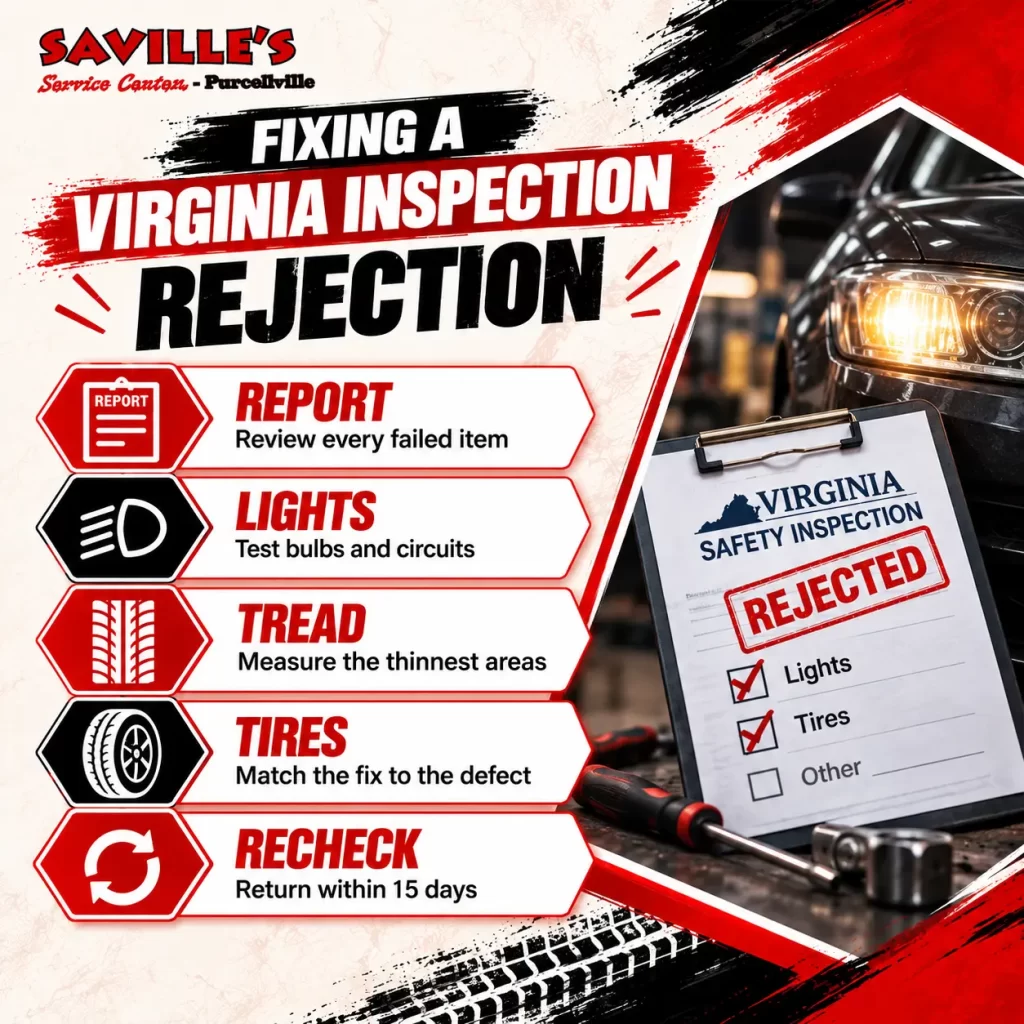
What to Do After a Virginia Safety Inspection Failure
Your first step is to match each rejection item with the repair it actually needs. A burned-out lamp may require a bulb, while uneven tire wear may point to a problem that will continue after new tires are installed.
Read the Rejection Report Before Authorizing Repairs
The rejection report identifies the equipment that did not meet inspection requirements. Ask the shop to show you each defect and explain whether it needs adjustment, repair, or replacement. This keeps the work focused and helps you confirm that every listed item is addressed.
A failed Virginia safety inspection does not always mean a large repair bill. Some lighting problems are simple, but cracked sockets, damaged wiring, corrosion, or poor grounds require proper testing. Tires can fail for low tread, exposed material, bulges, cuts, or other unsafe conditions.
Use the 15-Day Reinspection Period Wisely
Virginia’s rejection sticker is valid for 15 days in addition to the inspection date. During that period, the same station generally reinspects only the rejected items, unless another obvious defect is present. Returning to a different station requires a complete inspection.
The sticker itself does not restrict travel, but it does not excuse an equipment violation. A driver can still receive a summons for operating a vehicle with a defect. Review Virginia’s vehicle safety inspection guidance and avoid driving when a tire or lighting problem makes the car unsafe.
Why Vehicle Lights Cause Virginia Inspection Failures
Lights fail inspection when required lamps do not work properly, use an unapproved setup, show the wrong color, or have another condition covered by Virginia rules. Testing the full circuit prevents a replacement bulb from hiding a deeper fault.
Separate a Failed Bulb From a Circuit Problem
Begin with the exact lamp named on the report. A technician can inspect the bulb or LED assembly, fuse, socket, connector, ground, switch, and wiring as needed. If more than one lamp is out or a replacement fails again, automotive electrical diagnosis and repair can locate the shared fault.
For car light repair in Purcellville, VA, diagnosis matters during wet fall weather and the winter road-salt season. Moisture and corrosion can affect sockets and connectors, while rough rural roads may loosen a connection or damage a housing.
Check Every Required Lamp Before Reinspection
Test both low and high beams, tail lamps, brake lamps, turn signals, hazard lights, and the rear license plate lamp. Have another person operate the controls while you walk around the car. Check for dim, flickering, intermittent, or wrong-color output, not only lamps that are completely dark.
Use the bulb or assembly type intended for the housing. Virginia rules can reject a bulb that does not match the approved headlamp design. This is especially important when replacing halogen bulbs or considering LED conversions.
What Tire Problems Must Be Fixed Before Reinspection
A tire rejection requires more than adding air or rotating the tires. The repair must address the exact tread, sidewall, construction, or fitment problem recorded by the inspector.
Measure Tread and Inspect the Whole Tire
For most passenger vehicles, tire inspection requirements in Virginia call for at least 2/32 inch of tread under the state’s measurement procedure. Inspectors also look for wear indicators touching the road, exposed cords, bulges, knots, cuts, separation, and unsafe repairs. A temporary spare installed on an axle can also cause rejection.
Tread can be low in one area even when the rest looks usable. That matters on the rolling roads around Purcellville, Round Hill, and Hamilton, where wet pavement and fallen leaves already reduce traction. The thinnest areas deserve careful measurement.
Choose Repair, Replacement, or Alignment Based on the Defect
Some tread-area punctures may be repairable after the tire is removed and inspected. Sidewall damage, bulges, exposed material, separation, and tread below the legal limit usually call for replacement. The tire’s age, remaining tread, and the condition of the other tires also affect the recommendation.
Uneven wear can return quickly if the underlying cause is ignored. An alignment and tire wear inspection can identify incorrect wheel angles after pothole impacts or frequent travel on Route 7 and Route 9. Pressure, suspension wear, and rotation history should also be checked.
Saville’s Service Center explicitly services Ford cars, SUVs, and trucks, including lighting and tire concerns. Owners can review the shop’s Ford repair in Purcellville, VA, page for supported models and related services.
How to Prepare Your Car for Virginia Vehicle Reinspection
A careful final check lowers the chance of another rejection. Confirm every item on the original report, then make sure no obvious new equipment problem has appeared.
Confirm the Repairs and Return With Your Paperwork
Before your Virginia vehicle reinspection, retest every repaired lamp and check tire pressure when the tires are cold. Look over the remaining tires for fresh damage, especially after driving on gravel shoulders, construction zones, or pothole-prone roads in Western Loudoun.
Bring the rejection paperwork and return before the sticker period ends. Ask the station about its reinspection process and fee when scheduling. If the deadline passes or you choose another station, expect a complete inspection rather than a limited check of the rejected items.
Takeaways
Start with the rejection report, repair every listed defect, and plan the return inspection within Virginia’s 15-day window. Do not assume the sticker protects you from a citation or makes an unsafe tire acceptable to drive.
For lighting problems, test the whole circuit when a bulb does not solve the issue. For tire problems, match the repair to the defect and correct alignment, pressure, or suspension issues that could damage the replacement.
Frequently Asked Questions
How long do I have to fix a rejected vehicle in Virginia?
You have 15 days in addition to the inspection date while the rejection sticker remains valid. Complete the repairs and return within that period to use the state’s reinspection provisions.
Can I drive with a Virginia rejection sticker?
The rejection sticker itself places no travel restriction on the vehicle. However, you remain responsible for equipment defects and may receive a summons, so do not drive if the condition is unsafe.
Will one burned-out bulb fail a Virginia safety inspection?
Yes, a required lamp that does not operate correctly can cause rejection. The needed repair may involve replacing a bulb, socket, fuse, switch, or complete lamp assembly, or repairing the wiring.
What tire tread depth is required in Virginia?
Most passenger-vehicle tires must measure at least 2/32 inch under Virginia’s inspection procedure. The inspector measures where the tread is thinnest and also checks wear indicators and tire condition.
Do I need four new tires after an inspection failure?
You do not always need to replace all four tires after an inspection failure. Replacement depends on which tires failed, the vehicle’s drivetrain, tire size and type, remaining tread, and the condition of the other tires. A technician should inspect the full set before recommending how many to replace.
Schedule Inspection Repairs in Purcellville, VA
Have the issues from your failed inspection properly diagnosed and repaired before returning for reinspection. Contact the Saville’s Service Center team or call (540) 338-5749 to schedule service at 37251 E Richardson Ln, Unit B, Purcellville, VA 20132.